(Please learn to do your own Bible Studies like this one – here)
An in-depth Bible study for conscious believer’s baptism and how history and psychology influence us
How to use this book
I have written many points containing analyzes and interpretations of various Scriptures, history and the way we humans think. I have also made cross references within each point to other points which provide background and further understanding to each point. It kind of resembles the cross references found in many Bibles. So, remember to use those to dig into the subject from various angles to add further and necessary depth to the understanding.
Why and to whom have I written this?
Some Christians have grown up in churches – both Lutheran, Anglican, Presbyterian, Methodist, Catholic, Orthodox and others, where infant baptism and then confirmation was taught and practiced as a strong value. Maybe you have that background, but have now begun being a part of a church where the view on baptism is different from what you grew up with. You love your new church, the people, the leaders, the fruit it bears and life it brings. You also sense that they are asking you to re-visit your views on baptism. Perhaps you are required to be baptized as a conscious believer on your own confession of faith in Jesus, before you can enter leadership in this church – also representing in action the theology this new church stands for. This is written for you! It is designed, so that you can take the time to sit down, read it, study the Bible, let it form a basis for understanding this different view on baptism and maybe it can form the basis of conversations with leaders in your new church. So, use this as a starting point for possibly opening a new and different understanding and interpretation of the Bible around the subject of baptism so you can confidently, on a strong Biblical basis, act. This paper and the length and depth of it is written out of honor and respect for you and your church background, your mentors in the faith, your tradition. It is a recognition that your convictions are deep and your views have been influenced by another interpretation of what the Bible says about Baptism for a long time. Hopefully, this can help you understand the view of conscious believer’s baptism better – and lead you to confident action in favor of that view.
Honestly and unfortunately, so far, I have not been able to find a good deeper study or a book on the conscious believer’s baptism view – not in Danish and not even in English. And I fully understand that to many this is a deep, deeply sensitive and deeply rooted subject where you have much at stake both emotionally, intellectually, relationally, and pride – both negative pride (to say – I will never change my view) and positive pride (your desire to honor your church background and family). In the end of the day, though, we need to lay all things aside and be willing to follow God, the Bible, and the command of God – not our emotions, previous convictions, experiences, or tradition.
The fact is: We who are sure the conscious believer’s baptism view is correct would love you, who have the infant baptism view not only to see, understand and respect our view, but to act on it. This book is written to help you to confidently be able to switch view and then act based on truly healthy and correct theology. Faith is action. True faith is faith filled action.
Who is this, in its entirety, not really for?
This is not primarily written for you if you have never been baptized – not even as an infant – or you have been baptized and maybe confirmed as well, but it was more of a cultural thing for you – but now you have decided to become a believer. This paper in its entirety is not written for you even though you can learn a lot from reading it. I recommend that you go straight to Point 4.5. below – which contains the simple straightforward understanding of baptism as a conscious believer, as this subject was never meant to be complicated and hard to understand: In Acts of the Apostles people were always baptized immediately after expressing faith in Jesus – so, no long Bible studies or perfection of Christian life is required at all. Biblical, God designed baptism was, is and should be – your first confession of faith. The Bible is very straight forward and easy to understand and grasp on this point once you remove all the clutter of church history gone bad – and it points to being baptized as soon as possible after you have decided to believe and receive Jesus and what He did for you into your heart and life. It gets more complicated however, if you have grown up with a beloved, strongly taught and practiced different view of baptism.
INDEX OF POINTS
- Intro about the history of baptism and a definition of baptism terms
- How to read and understand the Bible in a healthy way
- The most likely definition of the word “baptism” in the Greek New Testament & 6 reasons to support it (with sub reasons)
- Scriptures on baptism analyzed in order of importance in terms of the words of Jesus and clarity
- The Great Commission – Matthew 28:18-20
- Jesus is baptized – Mark 1:9-11
- Let the little children come to me – Mark 10:13-16
- First sermon and baptism in the church – Acts 2:37-41
- The apostle Paul talks about the symbolism of baptism – Romans 6:2-4, Colossians 2:11-12
- How to become a Christian. What does it take? – Romans 10:8-13
- Salvation through baptism?
- A walk through – 1 Peter 3:21, Mark 16:16, John 3:3-6
- What does it mean that a child is sanctified or made holy through a believing parent? – 1 Corinthians 7:13-14
- What about baptism in the New Testament and new covenant replacing circumcision from the Old Testament and old covenant? – Genesis 17:10-12, Philippians 3:3, Romans 4:8-11, Romans 2:29, Colossians 2:11-12
- What about the Scriptures where a “full family of all ages” was baptized?
- The theology of the original / inherited sin and the age of accountability
- Why does it appear and seem like the Bible and the early disciples connected salvation and baptism?
- Do I even have to or need to be baptized at all?
- Is baptism equal to membership in the church?
- Is baptism a covenant?
- Is baptism as a conscious believer only a symbol of salvation or does God do something specific there?
- Do you get baptized in the Holy Spirit in baptism? Does baptism as a conscious believer give you an extra level or a special experience and encounter with God?
- What about my personal revelation regarding baptism versus the Bible?
- What about honoring your parents, leaders, friends and family? They really believe in infant baptism and will be very sad if I choose to be baptized as a conscious believer.
- How old should you be when you get baptized? And how old should you be in the faith to be baptized? What are the requirements for baptism?
- Should I remain a member of the church I am originally from like the Catholic or Lutheran church if I am actually more active in another church?
- Is Biblical baptism by full immersion or sprinkling / pouring?
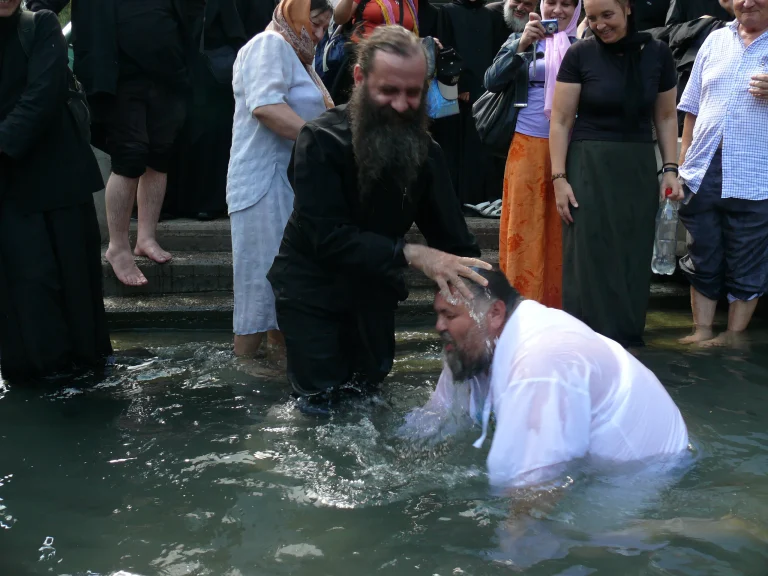
- How can conscious believer’s baptism be performed practically?
- Why get baptized? Why does God even command us to get baptized?
- The child – John the Baptist – could believe and receive the Holy Spirit inside the womb? Or could he? And can a parent or guardian confess faith for a baby?
- What about original sin and do babies go to heaven if they die? And is there a difference if they are babies of believing parents or not?
- Non-bible truth based, non-theological reasons that support conscious believer’s baptism –interesting observations
- Does God punish you for not being baptized as a conscious believer?
- How do we avoid baptism becoming a good deed you have to do on top of faith in order to be saved? And how do we avoid faith becoming a good deed you have to do – and it not be all of God?
- What about the Scriptures about predestination and foreknowledge of God we see in the Bible and how does this relate to baptism?
- What about being baptized again – a second or third time – even as a conscious believer? This point includes the short version of my own baptism story.
- What are some things which are wrong thoughts and attitudes around baptism?
- The compromise of infant baptism
- In God’s eyes – what is most important? Being passionately in love with and on fire for Him – or the correct form of baptism? What’s the story around baptism for the author?
- Real life stories of being baptized as an infant and then being baptized as a conscious believer
- Thoughts about perspective, pre-suppositions, bias, the psychology of people and religion
- Martin Luther and the incomplete Reformation
- Why is it not clearer – written in black and white in the Bible that: Baptism does not save you and you only get baptized when you yourself consciously know you believe and receive Jesus? Or why doesn’t it say: New born infants should be baptized. If they are not, they are not saved?
- The mistake of thinking your or someone’s lifestyle or theology is 100% correct and endorsed by God because God moves through you or someone
- Conclusion
- Please help make this paper better
- Resources for further studies
- Index of Scriptures referenced and explained
- Index of words and themes relating to baptism
APPENDIX 1
Meanings of the word ‘baptizo’ in Greek non-biblical literature written at the time of the New Testament
1. Intro to the history of baptism and a definition of baptism terms
What does early church history say about when and how to get baptized?
In terms of when the first absolutely certain instances of infant baptism occurred (none are recorded in the Bible), an important principle of theology formation in Christian belief must be underlined. In the early church after the Book of Acts they might have started baptizing infants quite fast – like 200 years after Jesus was born. The principle however, for “safe” and “sound” theology must stay with and within the Bible. We just really have to look to the Scriptures as our source of truth on this.
A case in point on this is, that we don’t even have to go outside the Bible – we don’t even need to go to the period right after the apostles to find the apostle Peter doing something clearly wrong and contrary to the teachings of Jesus in the very early church – and the apostle Paul had to set him straight publicly. The story is found in:
Galatians 2:11-14 (NLT)
11 But when Peter came to Antioch, I had to oppose him to his face, for what he did was very wrong. 12 When he first arrived, he ate with the Gentile believers, who were not circumcised. But afterward, when some friends of James came, Peter wouldn’t eat with the Gentiles anymore. He was afraid of criticism from these people who insisted on the necessity of circumcision. 13 As a result, other Jewish believers followed Peter’s hypocrisy, and even Barnabas was led astray by their hypocrisy. 14 When I saw that they were not following the truth of the gospel message, I said to Peter in front of all the others, “Since you, a Jew by birth, have discarded the Jewish laws and are living like a Gentile, why are you now trying to make these Gentiles follow the Jewish traditions?
So, we cannot use church history as our primary source of inspiration for our theology. Church history can and should inform and inspire us, but only if it lines up with Scripture. The Bible must always be first, which is also why I have put Scripture references and citations all over this paper. Please look them up yourself. Be a Berean, searching the Scriptures to see if what I write is right (Acts 17:11).
Baptism is a controversial subject even up to today. It really depends on how you interpret the Bible and for a lot of Christians – we must admit – we are very influenced by the view we have grown up with (see Point 29 about the psychology and religiosity of people). Why else do most people tend to stick with believing in what their parents believed? With this I will attempt to go through the Scriptures on baptism, faith and salvation, and add in some history or habits and patterns of thought which influence Christians today. I will attempt to peel away layers of misunderstanding of the Bible and show where the mistakes lead us. This is no small task – but I promise you, I will do my very best.
In terms of a brief introduction and overview of baptism, there are basically 2 main different baptism practices built on 2 different theologies (understandings of what the Bible says):
- One in which children are baptized as infants. I will call this ‘infant baptism’. They are then later confirmed. This baptism is usually performed by sprinkling or pouring water on the baby.
- Another where babies and parents are prayed for as infants at a baby dedication if the parents are believers and planted in a local church and the kids are then later baptized when they express the desire to follow Jesus themselves – and therefore want to be baptized. I will call this ‘conscious believer’s baptism’. This baptism is usually performed by complete immersion under water.
Both of those terms are carefully and thoughtfully chosen to avoid misunderstandings and unclarity – even misunderstanding stemming from calling conscious believers baptism for ‘adult baptism’, which is highly inaccurate and therefore misguiding because a child can understand the good news about Jesus and be ready for conscious believer’s baptism before they are adults (See Point 13. about the “right” age for baptism, and Point 4.7.5. about the ‘Age of Accountability). I would also say that the word ‘re-baptism’, used by some, is wrong. It is wrong based on a matter of perspective and interpretation of course as re-baptism is only re-baptism if the infant baptism was in fact a Biblical baptism. If infant baptism is not Biblical being baptized as a believer is not re-baptism. Infant baptism then becomes a baby dedication and their baptism as believers is just simply baptism.
2. How to read and understand the Bible in a healthy way
Christians have always, like Jesus did, believed the Bible is the 100% inspired eternal Word of God. We believe all the writers were inspired in such a way that the Bible is a book we can really trust as a manual for life. It is a true love-letter from God. As Jesus said – not one little dot will ever disappear from the written word (Matthew 5:18). If Jesus said that – then that is how we should look at it and we will benefit from looking at it like that too. God is faithful to His Word forever – and will not go against it (Psalm 119, Matthew 5:18, 2. Tim 3:16). Martin Luther of the Great Reformation translated the Bible into German for the first time because he believed every believer should read and understand it for themselves – as well as hearing it preached and taught by church leaders. One of his mottos were: Sola Scriptura = only by the Scriptures. Christians globally also believe in the Apostolic Confessions of faith as well as the Evangelical Alliance confession of faith (please Google them). These are standard confessions of faith around which all Christians across denominations have agreed throughout church history. They are also a way to distinguish Christians from sects. There are some simple and easy to understand principles for how to read and understand the Bible which Christians use and which I will use in this paper.
- Scriptures must be used to interpret Scriptures. So, to get a full understanding of what the Bible says on a subject one must study all the places where the Bible talks about this subject, the so called cross references – and the context of those. See Psalm 119:160 (NIV) The entirety (fullness NKJV) of Your Word is truth.
- Priority of truth when something is unclear:
- The highest and clearest revelation about a subject is in the words of Jesus and then the rest of the New Testament and then in the Old Testament. Colossians 2:17 says it like this: These (Old Testament festivals) are a shadow of the things that were to come; the reality, however, is found in Christ. Not that the Old Testament in any way is wrong – on the contrary – The Old Testament is just as true as the New. Jesus said not one dot of the Old Testament would disappear. What is meant is that some things can be clearer and easier to understand in the New Testament.
- The clearest passages must be used first and foremost to interpret the less clear passages.
- The centrality of Jesus and the cross: Everything in the Bible is – at the end of the day – about Jesus. Everything points to Him in one way or another (Colossians 2:1-12). And everything points to the cross, where Jesus paid for our sins to save us, restore us and forgive us – not just into heaven, but working in and through us here on earth as well.
- Contradictions: There are no contradictions in the Word of God – as God knows what He is saying, He is forever the same and His Word lines up with His character and who He is. It is forever true and what He says lasts for eternity. One of the names of Jesus is even – the Word which was made flesh (John 1:14). Jesus is the Living Word – the Bible is the written Word. There might be paradoxes which can be a challenge to understand – such as the foreknowledge and pre-destination of God and the free will of man (see more in Point 23.), or the Trinity, but that is not the same as contradictions. Sometimes the seemingly opposing truths – such as the fact that Jesus is 100% man and 100% God – meet 100% in the middle and both are 100% true at the same time.
- The names, character and attributes of God: Generally, all Scripture must be interpreted in such a way that it supports the facts which go all across the Bible that: God is love, God is true, God is truth, God is light, God is positive, God is life, God is eternal, God is creator (He is not creation), God is Spirit, God is 100% just and righteous, God is our judge, God is our Lord / Leader, God is good, God is perfect, Jesus is God, God is all knowing, God is almighty – and best of all: God is our best Friend, Father and Brother. God is not an impersonal force or an energy.
These points lead our general reading of the Bible to us finding it is a love letter from our Dad – who loves us and the Bible is a 100% reliable resource about who God is.
The sum of it all is, that God has given us free will – a real choice with consequences. So, God wants us to be truly free, living with Him as Friend, living honest, just, openly, expansively, knowing we are loved by God and we are designed and called by God to live maximized having all the influence on this world we can through Him and for Him pressing through every hindrance to seeing His will happen here on earth. The biggest thing God wants us to grow in – is our friendship with Him based on His all-in love for us – based on one condition only – that we would dare to receive, trust and believe in that love – shown us through Jesus. The only thing God cannot forgive is if we will not accept and actively receive His forgiveness. If something, also our own negative, impatient or critical attitude, takes away from this core of growing dynamic friendship – it is not of God.
A great book to read around this is: How to Read the Bible for All Its Worth – by Gordon Fee & Douglas Stuart.
3. The most likely definition of the word “Baptism” in the Greek New Testament & 6 reasons to support it (with sub reasons)
The New Testament was written in Greek. What does the word, baptism, mean in Greek?
The Lexham Bible Dictionary: The word “washing” or “baptizing” (βαπτισμός, baptismos) refers to the act of dipping or immersing an object in water as part of a purification ritual.
HarperCollins Bible Dictionary: Baptism, an initiatory rite involving water. The term is derived from a Greek word meaning “to immerse in or wash with water”.
For more definitions see here: http://truediscipleship.com/how-is-baptism-defined-by-greek-dictionaries-3/
A.
If they had meant sprinkling, they would have used the word used in Hebrews 9:13, 19 & 21, 1. Peter 1:2, for sprinkling, ῥαντίζω – rhantizō; from ῥαίνω – rhainō (to sprinkle); to sprinkle: cleanse, sprinkled.
If they had meant pouring, they would have used the word ἐκχέω – ekcheō; (to pour); to pour out, fig. to bestow: pour, pour forth, poured, poured forth, pours, shed.1 It is for instance applied to the pouring out of the Holy Spirit in Acts 2:17-18. [1]
If they had meant to wash, they would have used the word νίπτω – niptō; a late form of νίζω – nizō (to cleanse); to wash, washed (Matthew 6:16-17 & John 13:10).
If they had meant to bathe, they would have used the word λούω – louō; a prim. vb.; to bathe, to wash: bathed, washed, washing. The word signifies either to bathe the whole body in water or to bathe the body all over by the application of water. It appears in John 13:10.
If they had meant to plunge down, to plunge under, to drown (in the sense that it is not coming up again) this word should be used: καταποντίζω – katapontizō; (literally meaning – under ‘kata’ the sea ‘pontos’); to throw into the sea: drowned, sink. It is found in Matthew 18:6.
If they had meant to make wet, this word should have been used for baptism: βρέχωc – brechō: to make something wet or moist, ‘to wet, to make wet, to moisten.’2 It is used in Luke 7:38. [2]
None of these are used in context with baptism. If baptism meant sprinkling, pouring or make wet, several of the ones above would have been much better suited. The only word used in the Greek New Testament for baptism is Baptizo which clearly means to immerse. We also find it used in literature outside the Bible to signify the immersing of clothes into dye to marinate.
B.
This understanding of immersion into – as a picture of burial – is also confirmed beyond doubt in the Bible itself in both Romans 6:2-4 and Colossians 2:11-12, where baptism is clearly best pictured by full immersion in water, symbolizing vividly and strongly:
- The life before believing in Christ – unclean and in our own pride (standing in the water before baptism by immersion),
- The personal identification with Christ’s death (dying to self, receiving the message),
- Burial, and
- Resurrection and then
- New life in the resurrection power of the Holy Spirit.
- For a fuller “immersion” into this aspect, please read Point 4.5. in this paper as that is one of the key points in this paper and in the Bible.
C.
It also makes perfect sense that full immersion was the practice when you see that “they came up out of the water” after baptisms in both Mark 1:10 and Acts 8:39. From these Scriptures it is clear, also in the original Greek text, that they were “going down into” the water and then “going back up and out of the water” after baptism.
D.
The Jewish ritual baths at the time – mikhwehs – were by full immersion3. So, one could strongly argue, it should have been explained explicitly that it was not like what the Jews were used to at the time. [3]
E.
The story of the Ethiopian Eunuch also very clearly points to full immersion – Acts 8:35-39a
35 Then Philip opened his mouth, and beginning with this Scripture he told him the good news about Jesus. 36 And as they were going along the road they came to some water, and the eunuch said, “See, here is water! What prevents me from being baptized?” 38 And he commanded the chariot to stop, and they both went down into the water, Philip and the eunuch, and he baptized him. 39 And when they came up out of the water…
Why would they stop at water they could go down into and come up out of if sprinkling or pouring was enough? They could have stopped at any point and sprinkled him to get baptized. He was from the royal Ethiopian court and was not in lack of water. This is another clear example of complete immersion.
F.
The use of the word “baptizo” in other writings in Greek at the time clearly indicate immersion. In the 9th book of the Odyssey, “baptizo” is used when a blacksmith plunges a piece of hot iron down under water to cool it down. Also, the classical Greek writer, Euripides, wrote “baptizo” when a ship sank beneath the water.
An excellent further resource and word study on the word Baptize in Greek is found in Appendix 1 at the end of this paper.
4. Scriptures on baptism analyzed in order of importance in terms of the words of Jesus and clarity
4.1. The Great Commission – Matthew 28:18-20 (NLT)
18 Jesus came and told his disciples, “I have been given all authority in heaven and on earth. 19 Therefore, go and make disciples of all the nations, baptizing them in the name of the Father and the Son and the Holy Spirit. 20 Teach these new disciples to obey all the commands I have given you. And be sure of this: I am with you always, even to the end of the age.”
These are central and core Bible verses around baptism. They settle with the very final words of Jesus before His ascension, that yes, baptism is central to the Christian faith forever. Jesus, God incarnate, commands us in love and with freedom to disobey, to be baptized. So, to be a disciple, a Christian, a follower of Jesus, this is one of the commands our loving heavenly Father wants us to obey. All the commands of God are there out of love to help us. A loving parent would say to their kid: Don’t put your hand on the hot stove – you will get burnt. Is it evil and limiting to say that? No, it is truly good and loving. The same goes for all God commands.
Why baptism and how? See: 4.5. for the core of the symbolism. Point 6. deals with whether we have to get baptized as Christians. Point 2.5. should hopefully be helpful in terms of understanding and accepting the commands of God – and even proactively drive us to seek to find all of God’s wisdom and counsel on all areas of life – for that is best for God, others and ourselves.
4.2. Jesus is baptized – Mark 1:9-11 (NIV)
9 At that time Jesus came from Nazareth in Galilee and was baptized by John in the Jordan. 10 Just as Jesus was coming up out of the water, he saw heaven being torn open and the Spirit descending on him like a dove. 11 And a voice came from heaven: “You are my Son, whom I love; with you I am well pleased.”
Jesus was baptized – even though He was already completely perfect in the eyes of God. This was not an act by which Jesus was saved and made perfect by God. Jesus was already perfect in God’s eyes. It is the same way when we get baptized today. We are already perfect in God’s eyes when we believe. Interestingly, Jesus Himself got baptized as a conscious believer even though He was already circumcised as an infant according to the law of Moses. Jesus was baptized because God the Father commanded it. God always commands out of love and we are free to obey or not – as was Jesus. Jesus always goes before us and never asks us to do anything He hasn’t done or wouldn’t do Himself. Baptism as a conscious – already justified believer – is one of all those examples.
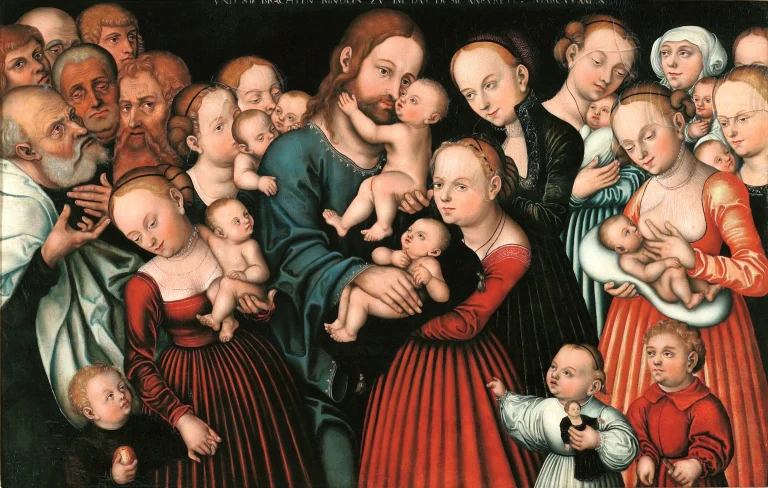
4.3. Let the little children come to me – Mark 10:13-16 (NIV)
13 People were bringing little children to Jesus for him to place his hands on them, but the disciples rebuked them. 14 When Jesus saw this, he was indignant. He said to them, “Let the little children come to me, and do not hinder them, for the kingdom of God belongs to such as these. 15 Truly I tell you, anyone who will not receive the kingdom of God like a little child will never enter it.” 16 And he took the children in his arms, placed his hands on them and blessed them. (Also see: Matthew 19:13-15; Luke 18:15-17)
This Scripture is in this paper to show that this Scripture is actually not about infant baptism at all even though it is often quoted at infant baptisms. Jesus did not baptize the little children in this passage, but blessed them – which either means He prayed for them or spoke positive words of encouragement and faith over them. He probably did both. This corresponds precisely to the practice of baby dedication performed in churches believing in baby dedication and then, after each person has chosen to become a believer, conscious believer’s baptism.
4.4. First sermon and baptism in the church – Acts 2:37-41
37 When the people heard this, they were cut to the heart and said to Peter and the other apostles, “Brothers, what shall we do?” 38 Peter replied, “Repent and be baptized, every one of you, in the name of Jesus Christ for the forgiveness of your sins. And you will receive the gift of the Holy Spirit. 39 The promise is for you and your children and for all who are far off—for all whom the Lord our God will call.” 40 With many other words he warned them; and he pleaded with them, “Save yourselves from this corrupt generation.” 41 Those who accepted his message were baptized, and about three thousand were added to their number that day.
This scripture (along with Acts 22:16, Acts 8:12, Acts 8:38 & Acts 9:18) settles the question of when the right time is to get baptized. The apostles and first disciples practiced baptism immediately after people decided to believe in the good news of the forgiveness of Jesus and turning from their own ways to follow Him wholeheartedly. God designed baptism to be one of the first things we do after becoming believers in Jesus. This is how it was practiced in Acts in the Bible. It is there as an example for us to follow. It is quite simple – really. That’s how it was meant to be.
4.5. The apostle Paul talks about the symbolism of baptism – Romans 6:2-4, Colossians 2:11-12
2 We are those who have died to sin; how can we live in it any longer? 3 Or don’t you know that all of us who were baptized into Christ Jesus were baptized into his death? 4 We were therefore buried with him through baptism into death in order that, just as Christ was raised from the dead through the glory of the Father, we too may live a new life.
Here we see how beautiful the symbol of complete immersion, which is also the true meaning of the word, baptize (Point 2.), is cementing and by multiply factors is confirming the interpretation that immersion under water as a conscious believer shows what Biblical baptism and salvation is all about.
To illustrate:
- The one getting baptized is standing in the water – symbolizing their dirty life of sin without Jesus before choosing to receive Him into their hearts.
- They then, as they stand in the water, share the reason they want to be baptized – confessing Jesus is Lord and they believe He lives.
- This is a public declaration of dedication to and submission to God through faith in Jesus Christ. It is a public identification with Jesus of a turning from personal sin and the ways of this world and the Devil to making Jesus Lord, the Leader of our lives.
- They are then immersed fully in water – baptized into His death and burial – and washed clean from sin by the Word and Spirit of God through faith action.
- To then be raised up from the dead with Christ into a new life with Jesus – the resurrection life – full of the Holy Spirit – and cleansed – their sins washed away.
One of the main reasons Jesus commanded us to be baptized and to be baptized by full immersion in water in this way is because this symbol is so geniously powerful, that it can only be God, who invented it. It is such an accurate and beautiful, multi-faceted illustration of the truth of what happened to us when we received Jesus and were saved. This is a perfect way to identify us with what we now believe happened with Jesus and us. Jesus commanded baptism and wants baptism to be one of the first acts of obedience for us after personally coming to faith in Him no matter if we grew up in Christian families or not.
Also just the fact that it is an “all in” – full body, soul and spirit, complete immersion experience talks volumes about the Christian life. It is all in – just like Jesus went “all in” for us.
And, just to underline this imagery of baptism as immersion and coming up out of the water as a picture of the death burial and resurrection of Christ, we also see it a second time here:
Colossians 2:11-12:
11 In Christ you were circumcised with a circumcision not performed by human hands. Your whole self, ruled by the flesh was put off when you were circumcised by Christ, 12 having been buried with him in baptism, in which you were also raised with him through your faith in the working of God, who raised him from the dead.
In Point 16. is an example of how conscious believer’s baptism can be done practically.
Describing baptism using the imagery of a relationship between a man and a woman
At baby dedication or infant baptism (which we can honor as a baby dedication) – you are dedicated to Jesus by your parents. You can also say, that the parents are hoping to arrange a good marriage for their baby. When you come to your own faith baptism as a believer is then like the engagement ring to the love of your life, which you have chosen yourself. The reality of the engagement is of course the relationship of faith, hope and love between 2 people. To say that the engagement ring is the actual engagement and the ring performs the engagement, so the ring is the core and foundation of the engagement would be obviously wrong to everyone. It would take away from and downgrade the core of the relationship and heart to heart commitment. When you die one day – or when Jesus returns, that is then the wedding – the fulfillment of the engagement, where there is a party, and you will be together forever and ever.
At this core Point allow me to say with Ananias who came to the apostle Paul who had received Jesus as Lord and Savior:
And now what are you waiting for? Get up, be baptized!
Acts 22:16 (NIV)
4.6. How to become a Christian. What does it take? – Romans 10:8-13 (NIV)
8 “The word is near you; it is in your mouth and in your heart,” that is, the message concerning faith that we proclaim: 9 If you declare with your mouth, “Jesus is Lord,” and believe in your heart that God raised him from the dead, you will be saved. 10 For it is with your heart that you believe and are justified, and it is with your mouth that you profess your faith and are saved. 11 As Scripture says, “Anyone who believes in him will never be put to shame.” 12 For there is no difference between Jew and Gentile—the same Lord is Lord of all and richly blesses all who call on him, 13 for, “Everyone who calls on the name of the Lord will be saved.”
This is the most precise description in the Bible of what is required to become a Christian. We must believe that Jesus lives and declare with our mouths that Jesus is our leader. This fits with what Jesus Himself said. If we will confess Him before people – He will confess us before His Father and vice versa:
Matthew 10:32-33 (NIV)
32 “Whoever acknowledges me before others, I will also acknowledge before my Father in heaven. 33 But whoever disowns me before others, I will disown before my Father in heaven.
Another foundational Scripture talking about faith and confession is:
2 Corinthians 4:13 (NIV)
It is written: “I believed; therefore, I have spoken.” Since we have that same spirit of faith, we also believe and therefore speak.
It furthermore fits with this description of faith and therefore salvation found later in this Point. Also see Point 18 to see if a conscious person can confess saving faith for an infant and Point 22 for how we avoid faith becoming a good deed you have to do to become a Christian.
What is faith?
Hebrews 11:1 (ESV)
Now faith is the assurance of things hoped for, the conviction of things not seen.
Apart from assurance and conviction, faith can also be called belief and trust. It is not just an “if” or, I am not sure. It is a trust in something past, present, and future.
This is what we believe in in a nutshell:
John 3:16 (NIV)
For God so loved the world that he gave his one and only Son, that whoever believes in him shall not perish but have eternal life.
All the following 17 Scriptures confirm that this choice to believe and have faith saves us. Baptism is not mentioned in any of them:
John 1:12, 3:14-17, 3:36, 5:24, 6:40, 6:47, Romans 3:19-28, 8:9-16, 10:9-13, 2 Cor. 5:17, Galatians 5:6, Ephesians 2:8-9, Philippians 3:2-11, 1 John 2:12, 4:15, 5:1, 5:13.
There are countless more like this – maybe around 100. Please look up more through the cross references of your Bible from the list above if you’d like. Compare this against only 3 references where the Bible according to some could be understood to say baptism saves you or is part of salvation. The evidence in Scripture to baptism not saving you and that faith is your conscious decision which saves is overwhelming.
Regarding those 3 places that could point to salvation in baptism – please read Point 4.7.1.
Here are some stories in the Bible, where people clearly were born again by the Spirit of God, so, they became believers and were saved, without being baptized right after hearing the message, receiving it, and being baptized:
The thief on the cross would be with Jesus in paradise on the day they both died – with no baptism:
Luke 23:39-43 (NASB)
39 One of the criminals who were hanged there was hurling abuse at Him, saying, “Are You not the Christ? Save Yourself and us!” 40 But the other answered, and rebuking him said, “Do you not even fear God, since you are under the same sentence of condemnation? 41 And we indeed are suffering justly, for we are receiving [c]what we deserve for our deeds; but this man has done nothing wrong.” 42 And he was saying, “Jesus, remember me when You come in Your kingdom!” 43 And He said to him, “Truly I say to you, today you shall be with Me in Paradise.”
The ones who were filled with the Holy Spirit – before they were baptized
Acts 10:43-48 (NIV)
43 All the prophets testify about him that everyone who believes in him receives forgiveness of sins through his name.” 44 While Peter was still speaking these words, the Holy Spirit came on all who heard the message. 45 The circumcised believers who had come with Peter were astonished that the gift of the Holy Spirit had been poured out even on Gentiles. 46 For they heard them speaking in tongues and praising God. Then Peter said, 47 “Surely no one can stand in the way of their being baptized with water. They have received the Holy Spirit just as we have.” 48 So he ordered that they be baptized in the name of Jesus Christ.
If you still say they were not Christians before baptism, you disagree with the interpretation Peter and the other Apostles used to understand what happened and take the appropriate action – which is baptism:
Acts 15:8
God, who knows the heart, showed that he accepted them by giving the Holy Spirit to them, just as he did to us.
Paul stresses that the message and reception of the message is the priority – not baptism:
1 Corinthians 1:10-17
10 I appeal to you, brothers and sisters, in the name of our Lord Jesus Christ, that all of you agree with one another in what you say and that there be no divisions among you, but that you be perfectly united in mind and thought. 11 My brothers and sisters, some from Chloe’s household have informed me that there are quarrels among you. 12 What I mean is this: One of you says, “I follow Paul”; another, “I follow Apollos”; another, “I follow Cephas”; still another, “I follow Christ.” 13 Is Christ divided? Was Paul crucified for you? Were you baptized in the name of Paul? 14 I thank God that I did not baptize any of you except Crispus and Gaius, 15 so no one can say that you were baptized in my name. 16 (Yes, I also baptized the household of Stephanas; beyond that, I don’t remember if I baptized anyone else.) 17 For Christ did not send me to baptize, but to preach the gospel—not with wisdom and eloquence, lest the cross of Christ be emptied of its power.
In Point 27. you can go deeper into the priorities of God around baptism, faith, a heart on fire etc.
As Martin Luther correctly said: Sola Fide (only by faith), Sola Scriptura (only the Bible), Sola Gratia (only by grace – which means God’s undeserved forgiveness), Solo Christo (through Christ alone), Soli Deo Gloria (only to God’s glory). We should honor him for restoring so many vital and core truths to the church. We stand on the good parts of the ground he took. We, however do not need to believe he was perfect and went all the way on all points to secure complete restoration of all original Bible truths. More reformers were to come after him, and more after them.
Please read more about Martin Luther and the Reformation in Point 30.
And please read more about avoiding seeing faith as a good deed in Point 22.
4.7. Salvation Through Baptism? – 1 Peter 3:21, Mark 16:16, John 3:3-6
4.7.1. 1 Peter 3:21 (ESV)
Noah’s … ark was being prepared, in which a few, that is, eight persons, were brought safely through water. 21 Baptism, which corresponds to this, now saves you, not as a removal of dirt from the body but as an appeal to God for a good conscience, through the resurrection of Jesus Christ,
Very simply interpreted this Scripture says that baptism saves symbolically – like Noah and his family decided to enter the ark, we, in baptism decide to enter Christ Jesus – who saves us through death and resurrection (not baptism) – and baptism is an amazingly clear and beautiful symbol, designed by and commanded of God to illustrate what salvation means – it’s IN Christ.
Furthermore – Peter defines what he means by saying baptism saves – when he says: “it is not the removal of dirt from the body but the pledge of a clear conscience toward God.” Throughout Scripture this pledge comes first and is enough for salvation, then, after that comes the baptism, which is then an outward sign of what has already happened inside.4 [4]
Mark 16:16
He that believes and is baptized shall be saved, but whoever does not believe will be condemned.
This is an often-quoted Scripture to prove that baptism saves. But people often forget to read the last part of the sentence, which clearly shows that it is only if you do not believe you will be condemned. You will only be condemned if you are not made perfect by Jesus complete cleansing of your sins, by taking them on Himself on the cross. This would have been a great occasion to settle once and for all and say that “whoever does not believe and is not baptized will be condemned” – but since that is not the case – the belief is what really makes the difference.
John 3:3-6
Jesus replied, “Very truly I tell you, no one can see the kingdom of God unless they are born again.” “How can someone be born when they are old?” Nicodemus asked. “Surely they cannot enter a second time into their mother’s womb to be born!” Jesus answered, “Very truly I tell you, no one can enter the kingdom of God unless they are born of water and the Spirit. Flesh gives birth to flesh, but the Spirit gives birth to spirit.
In light of Points 4.6. and 4.5. and the rest of this paper it is impossible to just quickly conclude that the water, which is talked about here, must be baptism. Firstly, there is no mention of baptism here, only water. Secondly, the water does not have to mean physical water. Jesus could very well mean what water is also meant to mean in for instance
Ephesians 5:26
Jesus wants …to make the church (the believers) holy, cleansing her by the washing with water through the Word…
So, it is “washing with water through the Word” (also see Romans 10:9-10 and Romans 10:13-14) and through being born again by the Holy Spirit of God, being baptized in the Spirit of God that we become Christians.
And, it is possible that the washing is merely a repeat or symbol of the re-birth, Jesus is talking about. We see this done in:
Titus 3:4-6 (NIV)
4 When the kindness and love of God our Savior appeared, 5 he saved us, not because of righteous things we had done, but because of his mercy. He saved us through the washing of rebirth and renewal by the Holy Spirit, 6 whom he poured out on us.
Again, this Scripture does not point us to make baptism equal to salvation, but to the “washing of rebirth” – which is the Spiritual part of salvation – what the Holy Spirit does – that, is the washing.
Furthermore Acts 22:16 (NIV) says:
And now what are you waiting for? Get up, be baptized and wash your sins away, calling on his name.
This, again, symbolizes what happens inside, when we call on His name – and illustrates that their “prayer of salvation” according to Romans 10:9-10 was done in their baptism.
Again, we have the interpretations found in Points 4.6. and 4.5 strengthened.
Please also read Point 5. where I explain one of the possible reasons for the wording of “salvation being closely linked with baptism” yet – baptism doesn’t save in the New Testament.
So, again, we can argue clearly that baptism does not save as it is also seen in Points 4.6. and 4.5.
4.7.2. Is a child sanctified or made holy, meaning saved through a believing parent? – 1 Corinthians 7:13-14
If any woman has a husband who is an unbeliever, and he consents to live with her, she should not divorce him. For the unbelieving husband is made holy because of his wife, and the unbelieving wife is made holy because of her husband. Otherwise your children would be unclean, but as it is, they are holy.
This is not a text dealing with baptism and eternal salvation of a child – because everyone would agree that a spouse is certainly not made a Christian automatically if their spouse is a Christian. This text is about whether a believer should stay with an unbelieving spouse. So, the word “holy” in this context must mean that the marriage is still right = holy and the children are still born within that holy marriage are holy in that sense.5 This is not a Scripture saying it is ok for Christians to marry non-Christians as we in 2. Corinthians 6:14-18 clearly see Paul warning strongly against this. Also, throughout the Old Testament we again and again see God saying to the Israelites to not marry people who are not Israelites. Why would a Christian choose to become one with someone with whom they cannot share the meaning of life, the core of their existence? Yes – the spouse can become a Christian – but there are absolutely no guarantees of this. This Scripture can then only relate to the fact that the marriage is still valid and the kids are born inside that valid marriage. [5]
4.7.3. What about baptism in the New Testament and new covenant replacing circumcision from the Old Testament and old covenant? – Genesis 17:10-12, Philippians 3:3, Romans 4:8-11, Romans 2:29, Colossians 2:11-12
Philippians 3:3
We who are the circumcision, we who serve God by his Spirit, who boast in Christ Jesus, and who put no confidence in the flesh.
What is his definition of circumcision:
- to serve by God’s Spirit,
- boast in Christ,
- put no confidence in the flesh? These are all conscious decisions based on understanding – not descriptions of a non-conscious 8-day old baby. He is talking about the new type of circumcision – that of the heart. See the explanation a bit further below on Romans 2:29 and Colossians 2:11-12.
Romans 4:8-11
8 Blessed is the one Whose sin the Lord will never count against them. 9 Is this blessedness only for the circumcised, or also for the uncircumcised? We have been saying that Abraham’s faith was credited to him as righteousness. 10 Under what circumstances was it credited? Was it after he was circumcised, or before? It was not after, but before! 11 And he received circumcision as a sign, a seal of the righteousness that he had by faith while he was still uncircumcised. So then, he is the father of all who believe but have not been circumcised, in order that righteousness might be credited to them.
Again – this is actually not a Scripture about baptism in any way. It’s a Scripture about how circumcision is a sign and symbol of salvation – but not the salvation itself. Funnily and interestingly enough this fits exactly with what I am saying about baptism. Baptism is an outward sign of what already happened inside. It is not salvation itself. Salvation is man to man (God), woman to woman, Spirit to Spirit, person to person. It’s about heart and decision.
Romans 2:29
A person is a Jew who is one inwardly; and circumcision is circumcision of the heart, by the Spirit, not by the written code.
Again – we see it is not about any outward act. The place of faith is in the heart through a decision to believe in what we heard (Romans 10:1-15) – not baptism. Circumcision is in the heart – not initiated and performed in a machine – however beautiful and God ordained – it always boils down to a personal friendship of the heart – nothing else – no additions needed. Like Martin Luther said: only faith, only Scriptures, only grace, only to God be the glory – not “only baptism”. Baptism must never be a “salvation machine” – where the action of baptism saves us – taking away from us personally meeting and interacting God – person to person – as a friend to a friend! This machine directly contradicts the central core of Christianity – we are called by God to be friends with God!
See more about this in Point 2. (the last point) – and more about the absolute centrality of personal friendship with God in Point 27.
Colossians 2:11-12
11 In Christ you were also circumcised with a circumcision not performed by human hands. Your whole self ruled by the flesh was put off when you were circumcised by Christ, 12 having been buried with him in baptism, in which you were also raised with him through your faith in the working of God, who raised him from the dead.
This is the main Scripture linking circumcision and baptism. It does not say anything about the age of the baptized. Since we have just seen in the Scriptures above that circumcision was not the saving “tool” or “machine” of God – even in the Old Testament it was about faith before anything else. Circumcision was just a symbol of the old covenant of faith – and so is baptism – a symbol of the new covenant of faith which Jesus established. Couldn’t we then deduct, since circumcision was done at the age of 8 days – we should practice infant baptism? And they seemed to practice “full family of all ages baptism” in Acts of the Apostles. So, it fits?
No.
Again – like in the previous Scriptures talking about circumcision in the New Testament it mentions – your whole self ruled by the flesh was put off when you were circumcised by Christ. This is not something that happens automatically in a baby – but after Christ Jesus is first accepted personally there must be a personal conscious ascent, acceptance, application and personal working out of what has taken place inside. None of the two are done as a baby in a baptism “machine” – neither the first believing faith for salvation – nor the working out of the Christian lifestyle.
As a final kick towards what really matters, please read this Scripture:
Galatians 5:6 (NIV)
For in Christ Jesus neither circumcision nor uncircumcision has any value. The only thing that counts is faith expressing itself through love.
Not baptism, faith in Christ. Not circumcision, faith in Christ.
Also;
Please see more about “full family of all ages baptism” below in Point 4.7.4.
Please read about how personal conscious faith always comes before baptism here: Point 27.
Please read more about the dangers of the “Salvation Machine of Baptism” here: Point 26.
Also see more about whether baptism saves in all of Point 4.7. and find Point 5. where I talk about why it seems salvation and baptism are so closely linked in the New Testament.
4.7.4. What about the Scriptures where a “full family of all ages” was baptized?
Acts 10:33 (all in the household were gathered),
…we are all here in the presence of God to listen to everything the Lord has commanded you to tell us.
Acts 10:48 (they were gathered)
… he ordered that they be baptized in the name of Jesus Christ.
Those who were baptized were those who were there “to listen”. Babies can hear – but they cannot listen. No babies are mentioned. It cannot be concluded, that babies were baptized in this case.
Their own interpretation of the whole incident also confirms their salvation before baptism.
Acts 15:8
God, who knows the heart, showed that he accepted them by giving the Holy Spirit to them, just as he did to us.
Those who were baptized were clearly the ones who had heard, understood and received the message of Jesus! And here they even were filled with the Holy Spirit and were therefore saved Christians before being baptized.
Acts 16:14-15
The Lord opened her heart to respond to Paul’s message. 15 When she and the members of her household were baptized…
She responded to the message – and was baptized. The fact that it does not say, what the household heard and how they responded does not mean they did not. We cannot argue with force or certainty from silence. Had it said something along the lines of: Even those who did not hear and believe were baptized – as well as all infants in the household – then we would have a different story. But it does not.
Acts 16:31-34
31 They replied, “Believe in the Lord Jesus, and you will be saved — you and your household.” 32 Then they spoke the word of the Lord to him and to all the others in his house. 33 At that hour of the night the jailer took them and washed their wounds; then immediately he and all his household were baptized. 34 The jailer brought them into his house and set a meal before them; he was filled with joy because he had come to believe in God—he and his whole household.
Again – it clearly says, they preached (Romans 10:13-14), the people clearly believed (v 34), then they were baptized.
1 Corinthians 1:16 (please see the complete Scripture in the end of Point 4.6.)
I also baptized the household of Stephanas.
The interesting thing to notice in the Scripture above is that the whole context is about preaching the good news of Jesus. And he clearly puts that ahead and above baptism in terms of importance. Baptism is there and should be done – but the most important thing is preaching. Why: From preaching comes faith. And from faith comes salvation. After that comes baptism as a symbol of salvation – right after salvation – as the salvation prayer and the first act of faith if possible.
No explicit clear passage about the baptism of infants
Also, it is important to note and point out the simple straight forward fact, that there is no clear explicit mention of a teaching or an action done anywhere in the Bible, where babies are baptized. On the contrary, babies are blessed and personally conscious believers are baptized on their own confession of faith immediately after coming to faith. It’s so simple and straight forward, really.
4.7.5. The Theology of The Original / Inherited Sin and the Age of Accountability
What about original sin and do babies go to heaven if they die? And is there a difference if they are babies of believing parents or not?
Firstly, to understand if baptism saves infants or not, please read the Point: 4.7. and Point 18. about the faith of John The Baptist as a baby.
Secondly, this Point will deal with whether there is such a thing as original sin – and do babies go to heaven if they die and have not been baptized or received Jesus as conscious believers?
It is a generally accepted fact that babies and young children under the age of puberty do not perfectly unselfishly love. They are selfish and can be tempted to do bad and they do do bad.
The Bible is very clear on this point too:
Romans 3:23
All have sinned and fall short of the glory of God.
These Scriptures further illustrate the problem we all have with sin, not loving God, others and ourselves unconditionally and completely, and our rebellion against God – even coming from our core – our hearts:
Psalm 51:5, Ephesians 2:3, Genesis 6:5, Genesis 8:21, Jeremiah 17:9, Psalm 143:2, John 2:23-25, Romans 5:12.
We are all born with a sinful nature because we are all children of Adam and Eve – who sinned and passed on their fallen state away from God to the next generations. So, we have inherited a world and a body and nature which is broken, contains death – which was never God’s intention. This world has a bent – an inner tendency towards selfishness – not an inner tendency to love and know God as our best friend through Jesus, and love others and love ourselves. That need, that longing and desire to love God and know His presence and Spirit, though, is also in there, but we are not born knowing Jesus – we need to proactively choose to receive Him. The responsibility is on each of us to make an active choice to stop the unbelief, stop the denial, stop believing the lie that God is not there for us. Our default if left to ourselves is to not know Him. This is called the original sin which separates us from God and influences the world all the time since Adam – it is in a fallen state – away from God. so, not everything that happens here is done by God. God set everything in motion, yes – but some of what He set in motion had the free will to choose the good that God commands or the opposite.
Joshua 24:14-15 (ESV)
14 “Now therefore fear the Lord and serve him in sincerity and in faithfulness. Put away the gods that your fathers served beyond the River and in Egypt, and serve the Lord. 15 And if it is evil in your eyes to serve the Lord, choose this day whom you will serve, whether the gods your fathers served in the region beyond the River, or the gods of the Amorites in whose land you dwell. But as for me and my house, we will serve the Lord.”
So, are babies guilty of sin because of choices or due to the inherited, non-serving sinful nature – and will they therefore go to hell? Or is baptism the solution, God’s instrument of salvation (see Point 4.7.X on that question)? Or do only kids where at least one parent is a believer go to heaven (see Point 4.7.2. on that Scripture)? Or is there another Biblical view?
I believe that there are biblical grounds to believe in what is called the age of accountability. I believe all children under the age of accountability, which I also define as puberty, where you become an adult physically, and therefore enter a new level of responsibility and accountability, go to heaven. This level of the purity of innocence also has no shame at nakedness – where Adam and Eve covered themselves when they became aware that they had broken trust, love and obedience to the Words of God.
The Scriptures to support this are:6 [6]
James 4:17
If anyone, then, knows the good they ought to do and doesn’t do it, it is sin for them.
So, if you don’t know what good to do, it is not sin? It could look like that.
Luke 14:47-48 (NIV)
47 “The servant who knows the master’s will and does not get ready or does not do what the master wants will be beaten with many blows. 48 But the one who does not know and does things deserving punishment will be beaten with few blows.
This indicates that there is a differentiation in the mind of God between knowing or not knowing what is right and then doing bad or god.
2 Samuel 12:21–23
21 Then his servants said to him, “What is this thing that you have done? You fasted and wept for the child while he was alive; but when the child died, you arose and ate food.” 22 He said, “While the child was still alive, I fasted and wept, for I said, ‘Who knows whether the Lord will be gracious to me, that the child may live?’ 23 But now he is dead. Why should I fast? Can I bring him back again? I shall go to him, but he will not return to me.”
This indicates David thought he would go to be with his baby child in heaven one day.
Deuteronomy 1:39 (NIV)
And the little ones that you said would be taken captive, your children who do not yet know good from bad—they will enter the land. I will give it to them and they will take possession of it.
Little ones who do not know the difference between good and bad. That indicates a difference in God’s view on them.
Isaiah 7:16 (NIV)
… before the boy knows enough to reject the wrong and choose the right…
Again, the recognition that there is an age in which you know right from wrong.
Romans 9:11 (NASB)
… though the twins were not yet born and had not done anything good or bad…
Romans 4:15
The law brings wrath. Where there is no law there is no transgression.
Romans 5:13 (NIV)
To be sure, sin was in the world before the law was given, but sin is not charged against anyone’s account where there is no law.
The law here, must be that of conscience (Romans 2:15) and that of nature – how can a baby be held responsible for breaking that?
Psalm 106:38 (NIV)
They shed innocent blood, the blood of their sons and daughters, whom they sacrificed to the idols of Canaan.
Here we see that there is such a thing as innocent blood. Blood of children.
Nehemiah 10:28 (NIV)
The rest of the people—priests, Levites, gatekeepers, musicians, temple servants and all who separated themselves from the neighboring peoples for the sake of the Law of God, together with their wives and all their sons and daughters who are able to understand.
Here’s a clear reference to the understanding vs not understanding the Law of God.
John 15:22-24
22 If I had not come and spoken to them, they would not be guilty of sin; but now they have no excuse for their sin. 23 Whoever hates me hates my Father as well. 24 If I had not done among them the works no one else did, they would not be guilty of sin. As it is, they have seen, and yet they have hated both me and my Father.
Again, there is a difference from having seen and heard and not having seen and heard.
So, in conclusion it could very well be that those who are so young, that they cannot be expected to understand to choose Jesus – go to heaven. It is, however not difficult to choose to accept to believe in Him. As Jesus said about children (not babies):
Matthew 18:1-6
At that time the disciples came to Jesus and asked, “Who, then, is the greatest in the kingdom of heaven?” 2 He called a little child to him, and placed the child among them. 3 And he said: “Truly I tell you, unless you change and become like little children, you will never enter the kingdom of heaven. 4 Therefore, whoever takes the lowly position of this child is the greatest in the kingdom of heaven. 5 And whoever welcomes one such child in my name welcomes me. “If anyone causes one of these little ones—those who believe in me—to stumble…
So, it is certainly possible, to simply believe, receive, have an open, trusting spirit and attitude towards our loving perfect heavenly Father – like a child naturally does towards their own natural father (unless something or someone has messed them up). Has someone messed you up? Will you allow that to keep being that way – or will you change that?
Please also read Point 13. for a deeper understanding of the right age for conscious believer’s baptism, and point 4.6. about the importance of personal choice.
5. Why does it appear and seem like the Bible and the early disciples connected salvation and baptism?
Due to the fact that people were baptized immediately after hearing and receiving the message people had the experience of both salvation and baptism in the Holy Spirit right after they heard the message therefore linking baptism extremely closely to their salvation experience causing the wording to sometimes sound like they were saved through baptism. Even though they had this salvation in baptism experience – they were still able to write in such a way that baptism and salvation can be clearly separated as 2 different events, where baptism is an outward symbol of inwardly being born again by Word and Spirit – symbolized in immersion by the complete immersion in and washing of the Word, and the death and resurrection of Jesus.
All baptisms with no exceptions in the book of Acts in the New Testament are immediately after coming to faith.
6. Do I even have to or need to be baptized at all?
I believe strongly, that if you “have to” do something. Then don’t do it because your attitude towards it and your positive understanding of why you should do it is missing. Instead go for going to this position: I get to do this! In the Christian life God is, through love and understanding, and our free will decisions calling us – and yes, commanding us, into a life of love, freedom, influence and justice through the grace and power of His Spirit. As Christians we should come to the realization that being obedient to God sets us truly free to be all we can be. It is awesome to obey God. There should be no pushing, no manipulation, no forcing in Christianity. We should be freely driven by the love of God to be obedient based on understanding His good and perfect will for us to all the great and awesome things God has for us.
Romans 12:1-2
I urge you, brothers and sisters, in view of God’s mercy, to offer your bodies as a living sacrifice, holy and pleasing to God—this is your true and proper worship. 2 Do not conform to the pattern of this world, but be transformed by the renewing of your mind. Then you will be able to test and approve what God’s will is — his good, pleasing and perfect will.
Please see: 4.1. where Jesus commands baptism for all Christians & Point 4.5. for further understanding – and action now.
7. Is baptism equal to membership in the church?
At my church we have no paper membership. All are welcome. You are also welcome and can even serve on teams and be a part of our services and groups if you do not yet believe. You are a member, if you show up and believe in Jesus. If you call our church home – you are in. All can serve in non-leadership roles – both Christians and non-Christians. But when you enter leadership, there is a requirement to be aligned and represent in action what the church stands for theologically. We might grant exceptions to the rule at lower levels of leadership if we think it will not cause problems of division in teaching.
We do not want to run with membership on paper, as we do not see that in the Bible. Neither do we have democracy and voting causing disunity and different directions, but our church is run by leadership through vision and healthy theology. You can choose to join and support the vision and the leadership or freely leave. The leadership is chosen by the Senior and Lead Pastors all the way down – like Jesus selected His 12 disciples and the 120 – and Paul selected his travelling teams. We are a leadership and vision led church.
8. Is baptism a covenant?
It is not thé covenant. It is a symbol, given by God, to symbolize that we are now receiving the new covenant bought and established by Jesus through faith in Jesus.
Please see Point 4.7.3. to read about how circumcision is a sign of the old covenant and baptism is a symbol of the new.
9. Is baptism as a conscious believer only a symbol of salvation or does God do something specific there?
Please first read Points 4.5. and 4.6.
Baptism is merely a command like the command to pray for the sick or to give. Does God meet us when we act in obedience to His commands? YES. Because this is what faith results in – action on the promises of God. Does baptism save you? No! It simply describes a spiritual reality, which is already true internally for the person getting baptized. If they confess Jesus for the first time in their baptism, they will also experience salvation through the baptism – but not because of the baptism. They will experience salvation in baptism because of the complete and perfect work of Jesus, and them receiving it by believing and confessing Jesus as Lord. They can do that in and through baptism or by praying a prayer. Just like a marriage ring or engagement ring shows outwardly what has hopefully already happened on the inside. Baptism is a matter of obedience which you can choose to obey or not – just like you are free to choose to pray for healing or not – even though God has commanded Christians to do it. If you do not pray for healing – you will not lose your salvation – or add to it. But you will step out in obedience to Jesus – and that will bless you and others around and about you. The same goes for baptism. You will, with a much higher probability experience the presence and blessing and miracles of God in your life and through your life to others the more you are obedient to the loving commands of God. This includes baptism and all other commands of Jesus.
10. Do you get baptized in the Holy Spirit in baptism? Does baptism as a conscious believer give you an extra level or a special experience and encounter with God?
In Romans 8:10-16 (NLT) we see how we receive the Spirit of God, who comes to live within us when we believe.
10 And Christ lives within you, so even though your body will die because of sin, the Spirit gives you life because you have been made right with God. 11 The Spirit of God, who raised Jesus from the dead, lives in you. And just as God raised Christ Jesus from the dead, he will give life to your mortal bodies by this same Spirit living within you.
12 Therefore, dear brothers and sisters, you have no obligation to do what your sinful nature urges you to do. 13 For if you live by its dictates, you will die. But if through the power of the Spirit you put to death the deeds of your sinful nature, you will live. 14 For all who are led by the Spirit of God are children of God.
15 So you have not received a spirit that makes you fearful slaves. Instead, you received God’s Spirit when he adopted you as his own children. Now we call him, “Abba, Father.” 16 For his Spirit joins with our spirit to affirm that we are God’s children.
By the Spirit we cry: Abba Father. We have an inner witness, where our Spirit with the Spirit of God – the Holy Spirit, who lives in us, who believe can say – “YES!” It’s like this: We just know inside, that we know, the we are sure, that we are children of God. Which dad among us would like his children to be unsure of His love and acceptance of them? Hopefully no sane dad would. Neither does God.
When we are born again by the Spirit of God, then (John 3:3-5), the Holy Spirit, all of Him, comes to live inside us, filling our Spirits, making us children of God, and we become the temple of God (1 Corinthians 3:16). So, we have all of the Holy Spirit – not half of Him, when we believe and are saved.
But I believe strongly, that we should expect miracles and a special touch of God in our baptism. But to promise that it will always happen and to motivate people to get baptized saying this will happen – could very well lead to disappointment. It does not always happen. What always happens – and what should be promised is that there is blessing in being obedient to God – and we should go all in for that blessing:
Hebrews 11:6 (NIV)
And without faith it is impossible to please God, because anyone who comes to him must believe that he exists and that he rewards those who earnestly seek him.
I think we should go for a touch from heaven by the power of the Holy Spirit. Healings, deliverances, in-fillings of the Holy Spirit and speaking in tongues should be expected and we should talk about it, go for it during and after baptism. In Acts more often than not – people were filled with the Holy Spirit at baptism in such a way that the power of God was noticeable. But the motivation for baptism should not be that – it should simply be: Jesus said it – I’ll do it asap – and it is an amazing way to proclaim and act on the faith you have in your heart and the confession you have in your mouth.
To study this question further. please read Point 4.5. on: the core of what baptism is about,
11. What about my personal revelation regarding baptism versus the Bible?
What if I feel God is not revealing to me or leading me to personally to be baptized as a conscious believer? What if I even believe God is leading me and showing me personally to not get baptized as a conscious believer? What if I really feel peace about it and feel God is accepting my infant baptism and then confirmation? I really took my confirmation seriously and it meant a lot to me.
A strong non-negotiable Biblical and theological interpretation principle is that any personal revelation must always first and foremost be submitted to the Scriptures. The Scriptures themselves say about themselves:
Hebrews 4:12-13
12 For the word of God is alive and active. Sharper than any double-edged sword, it penetrates even to dividing soul and spirit, joints and marrow; it judges the thoughts and attitudes of the heart. 13 Nothing in all creation is hidden from God’s sight. Everything is uncovered and laid bare before the eyes of him to whom we must give account.
All personal revelations, spiritual experiences must be submitted to healthy theology directly based on the Scriptures. We must realize that our emotions, history, upbringing, fears etc. can and will play around with us. The whole reason we have the Bible is that we have a book that we can actually go to and trust as a secure source of revelation, truth and knowledge of truth from God when handled correctly and with as few pre-suppositions as possible. God gave us a manual for life, for understanding Him, ourselves and our world. It shows that there is also a very real and dangerous liar, the Devil and his demons out there – who want to deceive us. So, we need to pray to God to help us to correctly divide the Word of God.
2 Timothy 2:15 (NASB)
Be diligent to present yourself approved to God as a workman who does not need to be ashamed, accurately handling the word of truth.
Through study and dialogue, discipleship, healthy church life, forgiveness, respect and honor – we need to submit to the love and truth of God. Our choices are real, they are important and do not just influence us – but even the generations to come – for eternity.
When it comes to confirmation, there is nothing in the Bible about confirmation at all. I believe the simple reason is because the writers saw baptism as the only thing needed which it is in a conscious believer’s scenario. So, even though you really meant it and maybe even experienced the presence of God and feel like you felt the blessing of God on this. That does not mean that that was and is what God wanted the procedure to be like. God is always near and always draws near when we seek Him – and as I write elsewhere, how we have been baptized is not number one on God’s priority list, but it is no way unimportant.
Please see Point 11 and 29 about experiencing miracles and the blessing and presence of God even though you are not doing everything according to God’s intention.
Please also read Points on: How to read the Bible – Point 2 The compromise of infant baptism – Point 26 & The core of baptism in Point 4.5.
12. What about honoring your parents, leaders, friends and family? They really believe in infant baptism and will be very sad if I choose to be baptized as a conscious believer.
When you have made your decision about baptism and the decision is to get baptized as a conscious believer – how do you still honor your family, who will get disappointed and sad?
I encourage you to strongly thank and honor your parents or guardians for bringing you before God, dedicating you to God. There is nothing wrong with their desire to bless you, dedicate you to God and to follow God in that way – on the contrary: That is amazing and awesome!
I recommend that you take the time to talk with them and say clearly: thank you for dedicating me to God and having me blessed in church and dedicated to God when I was a baby. I now want to be baptized as I have my own faith and I have discovered that conscious believer’s baptism is the practice described in the Bible. So, to me I am following wholeheartedly after God – also in this area – and I need to follow God more than tradition.
Actually, they should be happy, you are going for more of Jesus and taking action on following Jesus. And in the end of the day, the story of most of those who have had to do this have found that as your family and friends see that you still love them, honor them and serve them and you continue to love and serve Jesus wholeheartedly – your relationship will not really suffer. Please read some of those stories in Point 28 This story of how loving relationships and communication at the end of the day is more important than outward traditions illustrate my Point 27 beautifully – What is most important to God? And, your love for them, God and His Word could even inspire them to reconsider their stance on baptism. Your life following fully after Jesus will lead others to discover what God lovingly and freely commands (love is a fact – but love is an act) – and there should be no compromise (Point 26.).
13. How old should you be when you get baptized? And how old should you be in the faith?
In terms of age. Conscious believer’s baptism is not just for adults – but it is for children too. Babies who are not able to decide to follow and build a friendship with Jesus. In our family, we have waited to let our children get baptized when they were around 9-11 years old to be sure they remembered their baptism. They all asked us some years before this to be baptized, but we held them off a little.
Please see a deeper treatment of what is called the “age of accountability” in Point 4.7.5. This deals with whether children under a certain age go to heaven because they have not received Jesus personally. And it deals with what the age is when God holds each one of us responsible for receiving Jesus as our Lord and Savior.
In terms of the age you have in your faith in Jesus – it should be as soon as possible after coming to your own faith in Jesus. There are no requirements at all in terms of how much you know, how well you live the Christian life. Baptism is meant from God’s perspective to be your first act of faith – all you need to know is – you want to follow Jesus, all you need to have done right is: nothing – except deciding to believe.
14. Should I remain a member of the church I am originally from like the Catholic or Lutheran church if I am actually more active in another church?
Christianity is about setting God before all else. It’s about finding out what is really true in this life and the next. It’s about changing our ways to become His ways. It’s about bringing the will of God – the Kingdom of God to earth. It’s not forced but free will – willing change – driven by love, love from Jesus for us, and love for Jesus from us and truth. It’s discovering that the Bible – not religious traditions of people – should be the guiding principles by which we live.
Please read Point 12 on honoring your parents. Also, please read Point 26. about the compromise of infant baptism.
Should you be the member of 2 churches? I do not recommend it. We should be where we are 100% until we are not there anymore because we are somewhere else. We should be planted 100% in one church and dedicate ourselves to serve there, build relationships there, bring out tithe there, disciple others and be disciples, lead and be led. Be planted in one church – stay planted in one family. Build strong relationships in one place. It’s the best for us.
Regarding infant baptism, which I believe denominations are wrong about, they are actually, surprisingly, often very consequent here. In so many other areas some more traditional state churches are not consequent – but here, at least in Denmark – they will officially not let you be a member if you are baptized as a conscious believer having first been baptized as an infant. Some Lutheran churches and organizations even have repentance rituals for turning away from your sin of re-baptism – whereby you are rejecting the free grace of God given through baptism – according to them.
But as you read Point 24. about getting baptized as a believer on top of an infant baptism – please be assured – this is not a sin at all – on the contrary – full immersion on your own faith in Jesus is a beautiful Biblical God designed declaration of His purest grace towards you – and the infant baptism was an honorable baby dedication.
The basis of membership in a church should be whether you believe or not. Baptism is second to that.
Please read about staying in compromise here: 26. and the incomplete reformation of Martin Luther in Point 30.
15. Is Biblical baptism by full immersion or sprinkling / pouring?
Please read Points 3., 4.5. and 4.6.
16. How can conscious believer’s baptism be performed practically?
Please read Point 4.5. to understand the wonderful symbolism in full immersion on your own confession.
When Point 4.5. is read and understood it makes sense to do something, which looks like this.
You could set an expectation in the ones getting baptized and the people at the event, if any, for the possibility and likelihood of physically and experientially encountering God through their baptism. You could say things like: When we are obedient – and step out onto and into the water – there God meets us. God Himself has asked us – therefore let us expect that God through His Holy Spirit meets the ones getting baptized.
Throughout history God has been experienced in baptism: God spoke at Jesus’ baptism, the Holy Spirit came on Jesus at baptism: Matthew 3:16-17 16 As soon as Jesus was baptized, He went up out of the water. Suddenly the heavens were opened, and he saw the Spirit of God descending like a dove and resting on Him. 17 And a voice from heaven said, “This is My beloved Son, in whom I am well pleased!
Believers in the Book of Acts were baptized in the power of the Holy Spirit at baptism in water and subsequent prayer:
Acts 8:14-17
14 Now when the apostles in Jerusalem heard that Samaria had received the word of God, they sent them Peter and John, 15 who came down and prayed for them that they might receive the Holy Spirit. 16 For He had not yet fallen upon any of them; they had simply been baptized in the name of the Lord Jesus. 17 Then they began laying their hands on them, and they were receiving the Holy Spirit.
As they come down and stand in the baptism pool you ask them why they want to be baptized. They say something about believing in Jesus. Then you could say:
“On your own confession of faith, I now baptize you, NAME, to Christ Jesus, in the name of the Father, the Son and the Holy Spirit:”
As they go down, you could say: “Dead with Jesus!”
And as they are pulled back up: “Risen to new life in Christ Jesus!”
Then you can say to them: “Congratulations. You are now immersed in water as Jesus was and you are now – as your heart already was, symbolically washed clean from all sin. Let’s pray for you to be filled with the Holy Spirit.”
17. Why get baptized? Why does God even command us to get baptized?
I once heard someone say that in-stead of baptism, we could just fire off some rockets and celebrate in that way that they had come to faith. Although I get the idea, God has commanded this and it is an amazing, beautiful, God ordained, God breathed symbol of what God through Jesus has done for us in salvation. It’s a powerful testimony to the one getting baptized and those around them. Like the Lord’s supper it vividly portrays some of the core truths of what Jesus came to do – so let’s stick with baptism.
Please read the core of the matter in Points 4 and all sub-points for the full Biblical answer.
18. The child – John the Baptist – could believe and receive the Holy Spirit inside the womb? Or could he? And can a parent or guardian confess faith for a baby?
Luke 1:15
John the Baptist will be filled with the Holy Spirit even before he is born.
Luke 1:41
When Elizabeth heard Mary’s (with Jesus Christ in her womb) greeting, the baby (John the Baptist) leaped in her womb, and Elizabeth was filled with the Holy Spirit.
The fact that a child is filled with the Holy Spirit in the womb does not mean that the principle of progression of conscious personal belief before baptism is necessarily broken. God can fill a baby with the Holy Spirit if He chooses. Just like he, by the Holy Spirit can make a donkey speak (Numbers 22:28-30), he can make a backslidden king prophecy (1. Samuel 19:24) and he can make an unbelieving king blind (Acts 13:8-12).
In some churches the words spoken around the infant baptism include the pastor asking the child if they believe in Jesus and receive Him as Lord and Savior. The parent or guardian answers: “Yes!” Because of all I believe around baptism, I want to stop the baptism right there and say: “Stop – let’s get the kid to answer that one.”
According to the Bible a person cannot be forgiven of sin based on the faith of another:
Romans 14:12 (NIV)
Each of us will give an account of ourselves to God.
1 Peter 4:5
They will have to give account to him who is ready to judge the living and the dead.
Romans 10:9-10
9 If you declare with your mouth, “Jesus is Lord,” and believe in your heart that God raised him from the dead, you will be saved. 10 For it is with your heart that you believe and are justified, and it is with your mouth that you profess your faith and are saved.
Matthew 10:32-34 (NLT)
32 “Everyone who acknowledges me publicly here on earth, I will also acknowledge before my Father in heaven. 33 But everyone who denies me here on earth, I will also deny before my Father in heaven.
2 Corinthians 4:13 (NIV)
It is written: “I believed; therefore, I have spoken.” Since we have that same spirit of faith, we also believe and therefore speak.
All these Scriptures do not point to others confessing saving faith for us – but to the fact that we ourselves have to confess our own faith and then be saved.
Please also see Point 4.7.2. where I plainly explain an often-misinterpreted section in Corinthians where it seems the faith of the parents cause their child to be holy to God.
19. What about original sin and do babies go to heaven if they die? And is there a difference if they are babies of believing parents or not?
Please see Point 4.7.5 for Original Sin and Point 4.7.2 for if there is a difference if they are believers or not.
20. Non-bible truth based, non-theological reasons that support conscious believer’s baptism – interesting observations
- Almost all newer churches and movements – who are usually freer from obligation to tradition as they have the opportunity to start fresh – take the view of conscious believer’s baptism, not infant baptism.
- These are also the churches which are really growing, seeing many new people come to faith.
- So, a great majority of new, modern, and growing churches across the world hold to conscious believer’s baptism. Could infant baptism be one of the many things the new churches should not continue doing because it is a man-made tradition, not of God?? I believe so. See Point 26.
- Why is this argument not strong? Most newer growing churches could be wrong. The Bible is and will always be the main go-to source of truth on all things God, life and people. The majority have been wrong many times before. See Point 2.
- It could be argued that the full reformation of all things to New Testament Church life as intended by Jesus didn't stop with Martin Luther. He reformed many very important truths to the church – but more reformers had to come after him – and they have. See Point 30.
- Again – the Bible needs to be the main go-to source of truth on all things God, life and people.
- Could it be that infant baptism was "invented" when the Christian church and faith was in confusion and obscure mysticism, so it is really a man-made tradition? Should what we say and do point to direct contact with God or to ritual more than relation? Are we to trust in relationship or mechanics?
21. Does God punish you for not being baptized as a conscious believer?
No. But there is definitely blessing in being obedient to what Jesus commanded us to do. It is commanded just like Jesus commanded: Heal the sick, raise the dead, bring your tithes, give, love, be courageous, trust in me etc. The more we step into obedience – the better off we will be. Baptism is designed by God to be the very first act of obedience we do after becoming conscious believers. We should have new people get baptized – not pray a prayer, when they want to receive and believe in Jesus. It is a good thing, a beautiful thing. So, do it out of love for God – out of respect for God, because you now know you are loved and what God says is loving, beautiful, right and good for you and everyone else.
Jesus said in John 14:15: “If you love me, keep my commands.”
1 John 2:3 By this we can be sure that we have come to know Him: if we keep His commandments.
1 John 5:3 For this is the love of God, that we keep His commandments. And His commandments are not burdensome.
2 John 1:6 And this is love, that we walk according to His commandments.
James 2:14-26 (NKJV)
14 What does it profit, my brethren, if someone says he has faith but does not have works? Can faith save him? 15 If a brother or sister is naked and destitute of daily food, 16 and one of you says to them, “Depart in peace, be warmed and filled,” but you do not give them the things which are needed for the body, what does it profit? 17 Thus also faith by itself, if it does not have works, is dead.
So, if baptism by immersion because of your own conscious confession of faith it the baptism God intended. Do it. It’s simple, really. It’s not a burden – it’s a party and a celebration! It is love in action.
22. How do we avoid baptism becoming a good deed you have to do on top of faith in order to be saved? And how do we avoid faith becoming a good deed you have to do – and it not be all of God?
John 6:29 (NIV)
Jesus answered, “The work of God is this: to believe in the one he has sent.”
John 6:29 (NLV)
Jesus told them, “This is the only work God wants from you: Believe in the one he has sent.”
We clearly here in John 6:29 – and scholars agree that what this means is that the only work, that God requires from us, the only action, we need to take, the only thing that you could say: This is on us! This one is given by God for us to do. This is God’s only and final task for us. It also fits with John 16:8-11: 8 And when he comes, he will convict the world of its sin, and of God’s righteousness, and of the coming judgment. 9 The world’s sin is that it refuses to believe in me. 10 Righteousness is available because I go to the Father, and you will see me no more, 11 and about judgment, because the prince of this world now stands condemned.
Notice verse 9, where the only sin there really is – is that we refuse to believe. Because when we believe – all sin is gone – taken by Jesus on the cross.
So, this is God’s only and final task for us: That we do this “work” – to believe. I can see how this fits with everything else the Bible teaches. But this goes against what infant baptism stands for in many denominations. They believe that faith is so much a gift, that God mysteriously through infant baptism make us unconscious believers.
Yes, it is God alone who saves us perfectly, completely by grace. We have not deserved it and we cannot improve on His gift or make our chances of going to heaven or gaining more of His love by doing good deeds being nice people. But that does not mean baptism is our only hope for salvation as a magic salvation machine, even making baptism a good work… no, we do have this one responsibility like it says in Romans 10:9-10 (NLT)
9 If you openly declare that Jesus is Lord and believe in your heart that God raised him from the dead, you will be saved. 10 For it is by believing in your heart that you are made right with God, and it is by openly declaring your faith that you are saved.
So, we have this one responsibility. This one work – which is the work of God. God works it in us through the preaching of the Word, stirring faith, which is trust, causing us to use our free will to understand, to open up, to come under the positive influence of God and then dare to act, which is proof of faith, and which is also obedience. This then grants us salvation – through prompting us to open up directly, personally to God – by confessing Jesus as our Lord – our 100% leader. Baptism is not the core of that – just the genius, God given symbol of that.
Is faith a gift from God? Yes, all things – even the opportunity to choose to believe – are a gift from God, and the whole salvation package that Jesus gives us is purely based on what God Himself did – we can add or subtract nothing. It is a perfect gift. But we do need to do our part – which is not what the Bible calls “good works” or “good deeds”. Good deeds will never get us into heaven – because they will never erase the bad we have done. Thinking we can deserve our way into heaven through good deeds is a grave mistake. The whole reason Jesus came, was to say: “Believe in me, you are already good enough. Through faith in me – you can get to heaven – and not only that – you can live with me – bathing in my love and maximizing yourself in your life on earth as well.”
Believing and having faith in what Jesus did is not a good deed. A good deed is to help an old lady across the street. Built into and a pre-supposition to having faith in God is the understanding that I am, by faith, receiving a complete and continual forgiveness I cannot improve or deserve. That is why faith is the only doorway to heaven. We can only come to Jesus humbly, on our knees, recognizing we cannot do it. We have nothing to boast about other than the cross, Galatians 6:14: – As for me, may I never boast about anything except the cross of our Lord Jesus Christ. Because of that cross, my interest in this world has been crucified, and the world’s interest in me has also died. And, we can boast in our weaknesses: 2 Corinthians 12:9: Jesus said, “My grace is all you need. My power works best in weakness.” So now I am glad to boast about my weaknesses, so that the power of Christ can work through me.
Through faith we do no good deed – we add nothing good to the complete perfect work of Christ, it is grace, but through faith, which is a decision, we receive it.
About boasting
So, when the Bible says in Ephesians 2:8-9: It is by grace you have been saved, through faith–and this is not from yourselves, it is the gift of God – not by works, so that no one can boast.
The good works means we will never be able to come to God and say – look how awesome I am – I did all this good stuff – and because I did all this good stuff – you now have to save me. Look how good I am – I am better than everyone else. The work of God – the faith – is a work, because there is the action involved of confessing Jesus as Lord due to faith in Him in our hearts – but that in itself is the same as saying. I am not trusting my good works, my good deeds, my self-righteousness to get me to be accepted, loved, and called innocent by God.
It also says – I will boast of these 2 things: the cross and my weakness. Why? That is the ONE thing we can boast about that the cross leads us to understand, we are all loved by God and we need to understand that we are loved despite our weakness. That we believe is a decision to open our hearts to God – but it is not a good deed in terms of – oh I helped an old lady across the street. The very definition of Christian faith is: humility before God. I cannot do it – I am not perfect – so, I must get perfection from God, I need forgiveness from God. The very definition of receiving help from Jesus is that you can only come humbly, on your knees with no advantages due to your own niceness or goodness. You are equal to everyone else – rich, poor, black, white, “good”, “bad”, happy, sad, famous, infamous or unknown, we all come as we are to the same Jesus and find the same salvation, freedom, forgiveness, restoration, friendship, purpose, drive and fulfillment.
As mentioned earlier, Jesus said in John 16:8-11 there is basically just ONE sin – to not believe. How can God hold us accountable for our lives and decisions – even to believe – if it is all up to Him if He wants to give us the gift of faith? That wouldn’t make sense or give us any responsibility to choose.
At the same time – this could also very well be one of those paradoxes where there is a mix of free will – our responsibility – and the foreknowledge and pre-destination of God. Where in the end – God does it – and we do it. It’s 100% God and 100% man – like Jesus Himself was. Both are responsible. It is certainly wrong – or at least inaccurate or incomplete to say – I saved myself – through my faith. It is also wrong to say – that God saved me – and I did not even accept it or act on it – I did not make a decision about it – it just happened – I was forced into it by God.
Ephesians 2:8 is often understood and translated as:
For it is by grace you have been saved, through faith–and this is not from yourselves, it is the gift of God.
Meaning; even faith is 100% a gift from God.
But I strongly suggest a very simple, yet important shift in understanding of faith as a gift from God – which also fits within the parameters of the Biblical Greek – and which fits much better with everything else the Bible says about faith.
If faith is a gift from God, which He gives with no human decision or other involvement at all, that makes faith a thing which God gives – a mystical spiritual substance of some kind – which is never mentioned anywhere else in the Bible. The translation of this verse, which is both possible with the Greek and 100% consistent with all the other descriptions of faith in the Bible is that the gift, this verse (Ephesians 2:8) talks about is the gift of salvation.7 [7]
The other option to make this definition of faith consistent with the rest of the Bible is – that it could be seen as a gift in the sense that everything – even our life, all things and our free will is a gift – as well as salvation (1 Corinthians 4:7). So, the ability to believe is from God – and the fact that all things are fully done by Jesus and rests on Jesus and that revelation of Jesus is from Jesus – but NOT in the sense that we do not have our own choice whether to receive Jesus and in Jesus, His salvation or not.
Since there is no contradiction in the Bible – even though there are paradoxes and things that are incomprehensible – yet we are to strive to reach a better understanding – this could very well be the best interpretation of this verse.
When it is based on your faith – does it not then become up to you – meaning through works – your good works?
Some Christians are very adamant in passionately saying: It is God alone who saves!! Even the gift of faith is from God. He chooses those He wants to save.
And I agree. Only God saves through Christ – but I also believe he does not make us receive. He honors our free choices. He reaches out with salvation – we reach out with faith and trust in Jesus and the message – believing in our hearts God raised Jesus from the dead – and confessing Jesus as our personal leader. Then we connect and are saved by God.
We as Christians do not save anyone – nor can we save ourselves. This view seems right. It seems very God honoring. Trust in God etc. We let Him do what he sovereignly does. He is God. We don’t mess with God and take the credit or the glory for what only He has done! God reaches out to us and does all this in and through baptism. The problem is – it is true – but only half the truth – so in the end it becomes a pacifying, incapacitating, debilitating lie!! It leaves out our responsibility.
God will do whatever He will do. He is sovereign. It is only by grace! Touches on the theological battle btw. free will, foreknowledge and predestination.
This Scripture could just as well be about baptism as about other areas of pride – where we rely on other external things and factors – which are not Christ Jesus alone:
Philippians 3:2-11 (NIV)
2 Watch out for those dogs, those evildoers, those mutilators of the flesh. 3 For it is we who are the circumcision, we who serve God by his Spirit, who boast in Christ Jesus, and who put no confidence in the flesh— 4 though I myself have reasons for such confidence.
If someone else thinks they have reasons to put confidence in the flesh, I have more: 5 circumcised on the eighth day, of the people of Israel, of the tribe of Benjamin, a Hebrew of Hebrews; in regard to the law, a Pharisee; 6 as for zeal, persecuting the church; as for righteousness based on the law, faultless.
7 But whatever were gains to me I now consider loss for the sake of Christ. 8 What is more, I consider everything a loss because of the surpassing worth of knowing Christ Jesus my Lord, for whose sake I have lost all things. I consider them garbage, that I may gain Christ 9 and be found in him, not having a righteousness of my own that comes from the law, but that which is through faith in[a] Christ—the righteousness that comes from God on the basis of faith. 10 I want to know Christ—yes, to know the power of his resurrection and participation in his sufferings, becoming like him in his death, 11 and so, somehow, attaining to the resurrection from the dead.
Let’s trust in nothing external when it comes to God. Not how we have been baptized either. Compared to knowing, walking with, believing in the person, our Friend, Jesus Christ – baptism is nothing.
23. What about the Scriptures about predestination and foreknowledge of God we see in the Bible and how does this relate to Baptism?
In the Bible there are clear references to:
- the fact of free will of people to choose creating real responsibility on us and making humans much different than animals (Joel 3:14, Galatians 5:13, John 7:17, Revelation 3:20)
- the fact of free will of angels to choose and for demons to choose (Ezekiel 28, Isaiah 14)
- the fact that God, both Father, Son and Holy Spirit can freely choose (if He did not limit Himself to being faithful to who He is) – but God is still sovereign – He can do what He wants (Isaiah 46:8-11, Proverbs 16:33)
- the fact that the world with its natural laws are set in motion and God does not stop all the injustice until a final day of judgment where all injustice is stopped – therefore the whole world stop working like we know it on that judgment day (Hebrews 9:27, Matthew 13:49, 2 Peter 3:10)
- the fact that one day, God will judge and stop all wrong doing of people and restore creation away from its present fallen broken state (Revelation 21:2, Revelation 22:5)
- the fact that God is our eternally existing Creator – so He fore-knows things (Daniel 2:28, Acts 2:23, 1 Peter 1:20)
- the fact that the Bible talks about how God pre-determines things and selects people to be saved by Him (Romans 8:29, Ephesians 1:11, Ephesians 1:5, 2 Peter 1:10)
- the fact that God in the end takes responsibility for everything in the sense that He has created it all and set it all in motion – both the good, the evil, the unjust and the bad – yet is not completely responsible for the every-day free will choices we make, the choices made in the spiritual world by demons and angels or the flow of atoms in the natural laws in this broken fallen world
- There is something called the good and perfect will of God – like Jesus said: Pray – your will be done – on earth as it is in heaven. That means it doesn’t happen. But the dirt our bodies are made up of – should perform the will of heaven. It’s up to us.
- the fact that we can see God do miracles as we seek Him, believe Him, and trust His promises and act on His commands and promises (Hebrews 11:6)
With all the points and Scripture references above I believe the Scriptures on pre-selection for salvation are to be interpreted in such a way – that when it says in the Bible, that God pre-selects / pre-destines us, it means that
- He offers salvation to all (2 Peter 3:9),
- We choose to receive that offer,
- When we receive it – God selects us and grants us that salvation,
- God foreknew that that would happen,
- But it does not mean that God pre-decided in the sense that we had nothing to do with choosing it,
- It was a matter of a combination of the 3 – not an either > < or – but a both + and + and = God’s perfect gift of salvation + God’s foreknowledge + God preselecting – in knowing we would – and God selecting us – in the very moment we freely responsibly choose to receive His perfect offer of salvation.
Why am I writing all of this?
Some see infant baptism as a perfect example that God saves us by grace – and the beauty of baptism in this way is that we can do nothing about it. Salvation is given to us with no involvement from our side. They see faith as a good deed – and the Bible talks against relying on good deeds for salvation (please see a full treatment of this question in Point 4.6. & Point 22.). They say: it is grace – it is a gift given by God. God, the Word, the water, the faith of the parents / pastor / guardians does it all for you. The sad thing is that it takes away our responsibility both to preach in such a way that people get what we are saying and it takes away everyone’s responsibility to pro-actively choose. So, this theology is really many half-truths, that sound and look right, but they do not include the full counsel of the Word of God, so unfortunately, they lead to less fruitful beliefs, attitudes, practices, and actions.
I want to underline that it makes a real difference whether we choose to obey God, follow God, act on the promises and commands of God – or not. Everything is not pre-determined by God’s will. Whether we choose to go all in with all we’ve got or not in terms of our pursuit of Jesus, our developing and deepening our understanding of His love and Word, strengthening our commitment to His will – that has very real consequences for all of eternity for both us and those around and about us. What an awesome life of reality, consequences, purpose, destiny and hearts on fire God has created for us. It is also true that God has a will and foreknows everything because He is eternal – and He is sovereign and can in one sense – do what He wants. But – He will never act out of His character (see Point 2.4.). He is forever the same, yes (Hebrews 13:8), at the same time though, He is eternally creative and dynamic. Somewhere in the middle of all these facts they intersect and mix and sometimes it is hard to distinguish what is what – just like Jesus is both 100% man and 100% God – so God foreknows everything and is sovereign, and we also choose what we want – and have such a free will that we can even say no to God’s offer of love, free forgiveness, salvation, justification, freedom and truth.
The list of simultaneous are all true at the same time and makes us meet in the middle so they become collaboration and unity – like the Trinity and like Jesus being 100% both God and man. Again, we land on the centrality of the intense desire of God for all things to be about a friendship with Him. The beautiful friendship Adam and Eve was created for – as they walked with God in the garden of Eden in the cool of the day… Genesis 3:8 (NIV).
Baptism, therefore, is in no way the end station or even the starting station of a life on fire for and surrendered under God – it is, though, the natural, beautiful, step number 2 after deciding to receive the offer of salvation, forgiveness and a new life – which God is offering us all.
So, let us say yes! Yes, yes to this all in God life. Yes, it is only God who saves – but it is also us who choose to receive His offer, His covenant of salvation. And it is on us to continue to discover this new life Spirit Who comes to live within us – the Holy Spirit and all God’s goodness and wisdom for life, and receive His boldness to live out this God life.
24. What about being baptized again – a second or third time – even as a conscious believer? This point includes the short version of my own baptism story.
Even though I was baptized as an infant – now I think the right way is to be baptized as a conscious believer. Is that wrong?
Ephesians 4:4-6
There is one body and one Spirit, just as you were called to one hope when you were called; one Lord, one faith, one baptism; one God and Father of all, who is over all and through all and in all.
This scripture is about – one type of faith – not just believing once. In the same way – it is about one type of baptism, the Christian one – not about just being baptized once, ever. It’s about expressing unity around the fact that we adhere to the same faith – expressed in baptism. We are together in practicing baptism in the name of Jesus. This scripture is very clearly not written to specify the number of baptisms you can do. Again – the heart of God here is not even whether we have been baptized or not – but whether we are passionately, lovingly pursuing Jesus, believing and doing all He wants.
References for deeper understanding: Article on what is most important in Point 36. and the core of baptism is in Point 4.5.
So, is it OK to be baptized again as a conscious believer even though you have already been baptized before as a conscious believer? It’s up to you. It will not save you more. If you have already put your trust and faith in Jesus, you are good. If you were already baptized as a believer before, you are good. If you want to rededicate your life to Jesus after you have been away, and show that through baptism also, that is good and understandable. Remember though, baptism is not a magic freedom machine. It can, however, provide a great point of both private, before the church and before the world – public declaration and decision to recommit or re-surrender to Christ. This is fine. Go for it.
25. What are some things which are wrong thoughts and attitudes around baptism?
- That we set baptism higher in priority than that we take responsibility for having a living active on fire relationship with Jesus – see Point 36 about the priority of baptism
- That we replace personal faith on the person of Jesus with an outer machine like-action – in this case that would be baptism – but could be any number of things.
- That you think all is well – as long as you are baptized.
- That we obey people, tradition or any fear more than God in any area.
- That we hold on to baptism more than to Jesus.
- That we distance ourselves in a condescending manner from people with a different view of baptism than ours – please read Matthew 7:5
- That Christians get more passionate about fighting other Christians and their view of baptism, than standing together fighting the common enemy – the devil – please read: Ephesians 6:12
- That we criticize and attack Christians (and any other people) with other views than yourself without first seeking the heart of love God has for them and trying to get to know them as people.
- That anyone would force anyone to be baptized before they are ready.
26. The compromise of infant baptism
I believe God would call us into acting on all His truth – no matter the influence, friendships, status or pride we would lose. I believe, according to this Bible study, that it is right to go for baptism as a believer only. It is always best in the grand end of all things to go for all that God has – and not to compromise the eternal truth and Word of God. It is the most loving, the most truthful, the most long lasting, the strongest position, the wisest decision for all at all times – it is eternal and for all. We are not to let compromise, fear of man, loss of status hinder our pursuit of living out the love and truth of God. If you compromise there? Where else will you do it?
What are some negative consequences of infant baptism and sprinkling? It says: Faith is not a personal conscious decision and action. There is no complete immersion symbolizing the life of sin before faith, the complete and total body, soul and spirit commitment to Jesus, the personal identification with the death, burial and resurrection of Jesus, and the new life in the power of the Spirit. There are forms of wrong theology involved and woven into the fabric of the practice – like that infant baptism saves and you don’t need to take a personal decision to follow Christ Jesus. The Christian faith is so much a decision and a personal responsibility to then go out and expand, influence and change your world as you have been and are being changed, transformed yourself.
In fact, all the promises of God – starting with salvation over to seeing people filled with the Holy Spirit, speaking in tongues, prophesying, seeing the sick healed and delivered – stepping out in immediate faith – start with belief, and then acting on that immediately. Conscious believer’s baptism is like that – and so it fits perfectly with all the other promises of God. Infant baptism and the theology around it (even though there are many versions of this) in my experience tends to take away from the belief, decision, action sequence – therefor generating some sort of attitude which leaves things up to God that He asks us to do.
In one way or another – if God acts in a special way and we do not have to make a decision to receive it – which is the case if you believe in and practice non-conscious baptism, infant baptism – then at its core, it becomes a sort of pacifying machine – and that is not good. That is not the action taking, relationship building God wants at the very core of everything! A friendship – also a friendship with God – takes decisions and focused work.
Therefore, at the end of the day, infant baptism is a compromise, it is not actually Scriptural. The conclusion must be that it is one of the many things which Martin Luther and the other reformers along the line of church history did not recover completely from the dark middle ages. Many other reformers have fortunately come since Martin Luther as well and taken things even further onwards towards fuller restoration to New Testament Christianity – further from what he saw into complete recovery of the truths of God about church and Christian life.
To say it again; infant baptism takes away from decision, responsibility and initiative. It takes away from the freedom of choice, free will and the fact that what we choose to do with both salvation and living on fire for Jesus – is our choice. Yes, salvation and all of Christianity and life even, is all based on grace. That means we cannot make ourselves more perfect in the eyes of God than we are because Jesus makes us perfect. But it does not mean we have no responsibility, and we are just will-less machines predestined to do what we do by God. It is our awesome, wonderful and awe inspiring, extremely important and very real responsibility to hear it, respond to it, receive it through decision and act on it – living it out. The gift of perfection, salvation through faith is there as a complete perfect eternal free offer for all – but it is our responsibility to open our hearts to that message and walk it out. And in infant baptism – that responsibility to choose to receive, to humble ourselves and trust, to personally confess Jesus as Lord and act – like saying we trust a chair and then proving it by sitting on it – is taken away or at least very strongly diminished – and that is bad to the core!
This is not to say that people who believe in infant baptism do no confession, take no action and are bad Christians at all. As I say in Point 27. below – we can be baptized in right or wrong ways according to any baptism view and live on fire for Jesus, humble, growing, friendly yet strong in spirit, full of the Holy Spirit, working miracles, seeing people come to faith, hearing the voice of God etc. – or we can do the opposite as well!! And that is much more important than how we have been baptized, but it does not take away from the fact that there is still a degree of unhealthy non-involved machinery built into infant baptism – because it depicts an unconscious, un-active reception of Jesus which is contrary to what hundreds of Scriptures teach about salvation.
27. In God’s eyes – what is most important? Being passionately in love with and on fire for Him – or the correct form of baptism? What’s the story around baptism for the author?
Jesus was asked and replied:
Matthew 22:36-40
“Teacher, which is the greatest commandment in the Law?” Jesus replied: “‘Love the Lord your God with all your heart and with all your soul and with all your mind.’ This is the first and greatest commandment. And the second is like it: ‘Love your neighbor as yourself.’ All the Law and the Prophets hang on these two commandments.”
Nothing about baptism here.
You can believe and act wrongly about baptism and still be a Christian. Baptism doesn’t save you. Personal faith in Him very clearly does – please read:
My own personal story is that even though I was baptized as an infant and confirmed when I was 14 – I did not believe in anything. I never really gave it the time of day in my thoughts. When I was 19 I then became a Christian – but I was not baptized as a believer, unfortunately, until I was 21. Part of the reason was that I was not encouraged to do this because quite a few of my best Christian friends including the ones who led me to faith and my own family were from the Lutheran State Church. But between the age of 19 and 21 I was filled with the Holy Spirit, spoke in tongues, saw people healed from sicknesses and filled with the Holy Spirit and come to faith through my passion and work for and in Christ Jesus. I was a full on, on fire Christian – going for all God had – and still am.
I knew deep inside, however, that I needed to get baptized – but just didn’t get around to it, and also, it was a bit embarrassing to be completely honest, that I wasn’t baptized – as all the people around me at the time believed in believer’s baptism – as did I – but I just hadn’t done it even though I should have done it way earlier. So, all around me thought I was already baptized – and things were going well – I was making a difference, bearing fruit for eternity – God was with me.
I then visited a church where the meetings and sermons were very strong and a strong call to follow Jesus 100% was issued. The only thing I felt I heard God lovingly say was: “Get baptized now. You know it’s true. It’s overdue”. Soon after that I was baptized as a conscious believer.
So, it is true, that there is nothing about baptism in the greatest commandment of love. And even though it is not point number one of God’s list of priorities if everything but the absolute core is taken away – it is still commanded by Jesus and willing action on this loving commandment will and must flow out of the core of having a living on-fire relationship with Jesus!
What is more important than baptism and being baptized right?
It is important to not and know that God blesses and touches people not matter that they have a wrong theology in some areas – and even wrong lifestyles, convictions and sinful life practices in some areas. This is also true when it comes to different views and practices around baptism. So, people will experience the presence of God no matter if they have wrong theology for instance on the point of baptism. Many make the mistake of thinking God must be blessing their entire theology and lifestyle when they see God move and do things in and through them. That can even often cause religious pride to surface. The one that says: God is with me and I need to listen to no-one! The fact is that God has promised to move, touch and show Himself when we or others around us have faith – acting on the promises of God – seeking God. Why? Because anyone can come to God at any point in time and life – no matter how sinful they are, no matter how wrong they are – that is grace – undeserved love. God is grace. So, don’t make the mistake of thinking that because the presence of God is there, and there is fruit of the work and miracles happening – the theology is 100% correct. It takes more than the presence of God, miracles and fruit to confirm a theology. That is the very reason the paper is so full of quotes from Scripture and my best healthiest attempts to interpret them according to proven principles used for generations. Please see even more about this in Point 32.
The apostle Paul has at least 3 places in his letters, where he sets up a priority list in terms of what is most important to God:
Galatians 5:6
For in Christ Jesus neither circumcision nor uncircumcision has any value. The only thing that counts is faith expressing itself through love.
The whole chapter of 1 Corinthians 13 is the same. What’s most important – above knowledge, skill, action and miracles – is love.
1 Corinthians 1:14-18 is similar to Galatians 5:6
14 I thank God that I baptized none of you, but Crispus and Gaius; 15 Lest any should say that I had baptized in mine own name. 16 And I baptized also the household of Stephanas: besides, I know not whether I baptized any other. 17 For Christ sent me not to baptize, but to preach the gospel: not with wisdom of words, lest the cross of Christ should be made of none effect. 18 For the preaching of the cross is to them that perish foolishness; but unto us which are saved it is the power of God.
The interesting thing to notice in the Scripture above is that the whole context is about preaching the good news of Jesus. And he clearly puts that ahead and above baptism in terms of importance. Baptism is there and should be done – but the most important thing is preaching so that people can hear and believe and be saved.
Imagine someone who is totally on fire for God, uses all their energy, abilities and resources to grow, give and love God, people and themselves and is bearing much eternal fruit, but who is not baptized at all, who is not confirmed, who is not a member of any church, has never been to a church building, has never taken communion, who is not ordained to minister in a church and is not in leadership in a church.
Compare that to someone who is not on fire for God, making no difference, who is backslidden and no longer says they are a believer, but who has “done” all the things above in terms of whatever would be the correct baptism – plus they are judging the one, who is on fire for not having ticked all the right boxes.
Who do you think God looks on with favor? Who do you think is closer to Jesus?
Again – baptism is not unimportant. It is 100% part of the Christian life. There are just things which are more important – but it is both + and – not either + or.
One day it was as if God asked me: ”What can Christians by mistake end up worshipping, which looks good, but is not the person of Jesus? The answers would be: doctrines, baptism, the ministry, the Bible.”
Again, anything taking away from an ever deepening loving relationship, friendship with God through Jesus Christ – is not good.
Finally, I want to say with John the Baptist in:
Luke 3:8 (NIV) – slightly re-written:
Produce fruit in keeping with repentance. And do not begin to say to yourselves, ‘We have Martin Luther, the Pope and the Church Fathers as our father.’ For I tell you that out of these stones God can raise up children of those people and groupings. That is not what saves you.
Please also read Point 11. where I discuss personal revelation as opposed to what God reveals in the Bible.
Please read points: 4.5. about the core of what baptism is.
28. Real life stories of being baptized as an infant and then being baptized as a conscious believer
More real-life stories will be added here – including how family members reacted and how it is now.
Please also read my own story in Point 24.
29. Thoughts about perspective, pre-suppositions, bias, the psychology of people and religion
We are deeply shaped by our upbringing, by our mentors, by our feelings by our present influencers, by what we act on today and acted on previously, by our own motivations of losing face or respect, by losing power, by fear and insecurity, by losing what we presently see as truth. We who believe need to be especially conscious of this – as it was deeply religious believers in God – who along with the Romans and the entire human race, killed Jesus. We – of all people, therefore – need to have our hearts especially softened by Jesus, our minds clarified by the Holy Spirit and strengthened by the Word and the grace of God at the core. We easily risk like the Pharisees to think we are serving God – but end up killing God, love, truth, and Word embodied. It is a real all-important effort to do this. It takes time, honesty, humility, willingness to sacrifice pride, comfort and previously held strong convictions, willingness to disappoint other people close to you, willingness to stick out from the crowd and courage to act on truth and the logic of love. It takes outside help. Even that little thing, asking for help, requires humility, patience and love of truth. To change views requires ability to think clearly – without pre-disposed bias – knowing that that is very hard, bordering on virtually impossible – especially if you think you are 100% neutral! So, help us God of eternal truth in this formidable task. It is a very tough exercise. When we dare go there – saying I am not necessarily right – and then begin discovering truth our discovery of and growth in faith that God is with us can and should strengthen us in this, though, for in the end, if God is love, truth and goodness for ever, we should follow Him before all else. We, then, just need to be as sure as we possibly can, that we find the true truth of love from God.
And, there is more. We need to be acutely aware that tradition shapes us and conforms us. Respect and love for our parents form us. The stories told of moves of God in the past shapes our thinking – but maybe it was not the whole truth? Emotions of love play a role and shape an unconscious under-current. Fear also plays into all of this, so does trust. Whom do we trust? Whom are we suspicious of?
I realize, to change views on baptism some would have to:
- Quit their job and go into financial insecurity (for instance Catholic, Lutheran, Anglican, Methodist pastors and church employees). This fact will deeply influence the passion for them to seriously explore this issue on their own
- Admit they had been wrong all their life. Change deeply held theology – which is serious business
- Admit they had taught something which was not true
- Go against generations of believers before them
- Change views about something which they might feel like God has blessed and is blessing the infant baptism view and they feel God is with them (see more on this in Point 11., 10., 32.)
- Go against their denomination
- Go against insecurity and fear: What will my beloved and loving parents think? Respected pastors? Teachers? Leaders whom I trust?
- Loose friendships
- Loose prestige, status and recognition
- Break the insecurity of: I cannot understand it. It is too deep, hard and difficult. I evade the responsibility.
- Let me encourage you to eat the antidote: Trust God will help you – and believe in your ability to understand the Words of our loving Dad. You can do more than you think you can. Actually, God says in Philippians 4:13 You can do all things through Christ who strengthens you. And He says in 1 John 2:27 – But you have received the Holy Spirit, and he lives within you, so you don't need anyone to teach you what is true. For the Spirit teaches you everything you need to know, and what he teaches is true–it is not a lie. So just as he has taught you, remain in fellowship with Christ.
- This Scripture does not mean you don’t need anyone to teach you anything. That is intellectual pride. The New Testament is full of people teaching others. But it does mean the Holy Spirit lives in you and will help and guide you into all truth – which will never contradict the Bible.
- Let me encourage you to eat the antidote: Trust God will help you – and believe in your ability to understand the Words of our loving Dad. You can do more than you think you can. Actually, God says in Philippians 4:13 You can do all things through Christ who strengthens you. And He says in 1 John 2:27 – But you have received the Holy Spirit, and he lives within you, so you don't need anyone to teach you what is true. For the Spirit teaches you everything you need to know, and what he teaches is true–it is not a lie. So just as he has taught you, remain in fellowship with Christ.
- Go against tradition
- Why not just go with the easy flow – stay where you are? We need to let things of tradition stand up to strong deep logical Biblical scrutiny. The fact is that even though we who are Christians and should know and go for the truth of who God is, too often stay with what we grew up with. A lot of people simply do not stop and seriously consider, think, ponder, measure, evaluate, put themselves at neutral / zero, open themselves up to truly changing their minds – and then make the decision on what the evidence points to in terms of truth. I encourage you: This needs to stop with you. You are the only one, who can decide for you. What will you believe and what will you do – this is your responsibility. The consequences are eternal.
- My encouragement to you is: Be willing to pay the cost: It might cost you time, energy, relationships, status, pride…
- The antidote: It cost Jesus everything. And – in the end – the truth will last the longest and bear the strongest and longest lasting fruit.
Is it still all worth it? Yes.
Our heart’s attitude should be to love God and truth more than anything. In the end loving God and truth will lead to loving people, life, and yourself truly.
The Bible clearly says that we must receive “the love of truth” (2 Thessalonians 2:10). Truth that stands alone and is true no matter what tradition, upbringing, friends, family, leaders and pastors tell us – truth that is directly from God. Truth connects us directly with God – because God is truth. Lies and even half-truths in the end drag us away from God.
Proverbs 23:23 (NIV)
Buy the truth and do not sell it – wisdom, instruction and insight as well.
The only way to get to that – and it is not easy – is to first of all even be conscious of it and acknowledge that we are all biased towards being positive of what we already believe and love. If we deny that we have filters – we are sure to have the biggest filters. The Bible says in 1 Corinthians 10:12: If you think you are standing strong, be careful not to fall. The Pharisees thought they had it all right and were serving God powerfully – preserving the truth. They ended up in fact getting it all wrong – killing the One who was and is the Eternal Truth personified – Jesus. The more right you think you are – the more wrong you can also be. You could also be right – but the problem with thinking you know you are absolutely right – is that you are very unlikely to even make small corrections to what you think. The challenge to all of us is to be learning continually. The greatest leaders are truly those who ask the greatest questions.
Concerning baptism – this is particularly true. Strong good Christian families and kids there have grown up believing and practicing one view or the other. The views are deeply rooted. I have actually personally during the course of my life and the development of this paper tried to set myself to “zero” / “neutral” ripping every layer of pre-supposition off of the onion of my perspective and said – is Biblical baptism really truly infant baptism – or is it really conscious believer’s baptism? As you might have noticed I have personally come to the strong conclusion, that what the Bible says and what God therefore wants is clearly conscious believer’s baptism for everyone at all times under all circumstances.
The influences on us to change our view on baptism and anything else should actually not be because of convenience or because there is “fruit” coming out of one church or another, or “most people” are saying this or that or we like a particular church style or the people there better – and it should not primarily be because we want to be “a part of the accepted crowd” or accepted by the leadership. It should be because it is real core Biblical truth that you personally believe to be true, eternal, good, wise and loving truth from our heavenly Father. To come to that foundation of truth is part of what true maturity is and it will last – even when the storms hit (Matthew 7:24-25).
The main and core reasons, having honestly tried to first peel away every other influence, I have come to believe in conscious believer’s baptism, are found in Points: 4.5., 4.6., 26., 27., and of course the entirety of this paper.
There is also another psychological trap we can fall into, which influences our attitude on baptism (and everything else in life). It is the pride of: We got one! We won over the old boring traditional churches – or the other way around: We got one from those crazy shallow new churches. We win. We win over those who ridiculed, looked down on or persecuted us. The antidote: All things are a gift from God. God will humble the proud. Stand positively on and work humbly, always learning, yet strongly on love, freedom and the truth – that’s it.
So, we need to keep our hearts pure, clean, believing, loving God, life and people, going radically for Jesus. We need to keep our minds strong, sharp, Biblical, loving, loyal to God, truth and logic.
The whole reason I have written this paper is to show that you can and should – with strong logical Biblical theology completely intact – get baptized as a believer even though you have been both baptized as an infant (even by believing parents, pastor and church) and confirmed as a believer and you meant it and experienced the blessing and presence of God when it happened.
Please read why in Points: 4.5. The core of this paper
Please also read Point 26: The Compromise of Infant Baptism
Please also read Point 11 on: What about my personal revelation regarding baptism versus the Bible?
30. Martin Luther and the incomplete Reformation
As written at the end of point 4.6. there is so much we should thank Martin Luther for in terms of restoring New Testament, Biblical Christian faith to us. I do, however, not believe he restored everything he could and should have. More reformers have come after him changing important things which Martin Luther did not restore. The list of things Luther did not restore includes things like:
- The fact that it is not Biblical for the church to be led by people who do not necessarily believe. This is for instance the case in Denmark, where I am from, where the Lutheran state church is under the leadership of democracy. Also, the pastors are educated by secular universities who by default are not believers. The church – like a business or political party or a family needs to be led by people who 100% believe in what they stand for. Luther did not separate the church from the state in that way.8 The church of course, is under the law – but only if it is true, just and loving. [8]
- There was very little focus on the supernatural spiritual gifts of the Holy Spirit – starting with the experienced baptism in the Holy Spirit, speaking in tongues, healing the sick, freeing people from demonic oppression etc. This has been restored through the Azusa Street revival – and refined and restored continually since then.
- Also, he wrote some terrible wrong things about Jews, which Hitler could use as part of their pit of hell non-Biblical, racist, anti-Semitic policies.9 [9]
- Some would argue that at the end of his life, Luther was struck by a deep depression, which really changed his perspective negatively in regard to many subjects. The terrible anti-Semitic writings he published was published towards the very end of his life.10 [10]
- He also did not end the theology of infant baptism and confirmation – and unfortunately even persecuted believers who did. 11 12 [11][12]
31. Why is it not clearer – written in black and white in the Bible that: Baptism does not save you and you only get baptized when you yourself consciously know you believe and receive Jesus / infant baptism not allowed? Or why doesn’t it say: New born infants should be baptized. If they are not, they are not saved?
Full immersion baptism of people older than infants was 100% ingrained in the culture of the time. It was understood by default by all. It was so obvious to everyone that it was not needed to write it so clearly. The ritual baths at the time in Israel was by full immersion. It was clear to all that it was all about a personal relationship with Jesus – first and foremost, not about baptism primarily. The disciples had just hung out with Jesus in flesh and blood for 3½ years and friendship was where it was at! It was so obvious to all that it and not an issue at the time.
32. The mistake of thinking your or someone’s lifestyle or theology is 100% correct and endorsed by God because God moves through you or someone
Leaders living in deep hypocrisy, lies, adultery and all other kinds of sin have grown large churches containing awesome sincere Christians. These leaders have seen major miracles happen, and preached powerfully and seen major revivals like heaven was agreeing with their entire lifestyle and theology. This has happened within all church denominations, movements and ministries.
I will be the first to admit, that I am personally grateful for all things in the kingdom being based on grace and faith – not personal holiness or perfect theology. None of us are perfect. God doesn’t move through us based on our personal level of holiness and ability to do right – but based on faith in His Word. Psalm 138:2 says God has placed His Word and His name above all else – so the fact that God is moving through us or blessing us in some way is simply undeserved grace and is due to us in some areas believing in His Word and name – but it is not a total endorsement of anyone’s complete life and lifestyle or their theology. God is an all or nothing God in terms of letting us into heaven. We need to be perfect and faith in Jesus gives anyone who will believe it – that perfection. But this period of time that we are living in – is the time of grace. God reaches out to low and ‘high’, ‘perfect’ and imperfect. If God only moved through and for perfect people – He wouldn’t be able to do anything at all on earth through our prayers or actions.
How does this relate to baptism?
People from all perspectives on baptism can tend to be sloppy with their own investigation of and understanding on this subject and all others for that matter because they feel and experience God is with them, working in and through them. What we see is that God is working by His Spirit in and through all people who will believe and act and through people from all church denominations who will seek Him and practice principles that lead them closer to a relationship with Him – and as I have shown here – salvation and filling of the Spirit is not given in baptism, it can happen there and we should go for that, but in believing what Jesus did and following Him, building a relationship with Him. Please read more about what is most important to Jesus in Point 27.
33. Conclusion
The Bible is very clear and simple, it really is. We are good at confusing things. Voluntary baptism as a conscious believer is the Biblical baptism commanded by Jesus for all believers without any individual exception. Follow Him, Jesus, in baptism – and do it now – like the Bible says – do it freely – by your own decision, freely obeying and submitting to the love of our amazing God. Infant baptism and baptism by sprinkling or pouring are not what God originally intended and the reformers, like Luther, did correctly reform some things, but did not reform all things completely. More reformers were to come after Luther to uncover and apply even more of all the wonderful truths of God and church life which we lost after the apostles died and up until the dark middle ages.
So, allow me to lovingly, smilingly, yet on strong and secure Biblical grounds and therefore with the authority and strength of God, say with Ananias who came to the apostle Paul who had received Jesus as Lord and Savior:
And now what are you waiting for? Get up, be baptized!
Acts 22:16 (NIV)
34. Please help make this paper better
Please send any comments, ideas for greater clarity or expansions to: peter@skov.cc
35. Resources for further studies
www.GotQuestions.org – even though we do not necessarily agree with everything on this website – it does have helpful answers and resources for many deep and good questions about the Christian faith.
www.DesiringGod.org – even though we do not necessarily agree with everything on this website – it does have helpful answers and resources for many deep and good questions about the Christian faith.
www.Bible.com – a great free online Bible reading tool / also available as an App
www.BibleGateway.com – a great free Bible reading tool
www.e-sword.net – a great free Bible program for your PC / MAC
36. Index of Scriptures referenced and explained – ordered as they appear in the Bible
Genesis 3:8 – Point 23.
Genesis 6:5 – Point 4.7.5.
Genesis 8:21 – Point 4.7.5.
Genesis 17:10-12 – Point 4.7.3.
Numbers 22:28-30 – Point 18.
Deuteronomy 1:39 – Point 4.7.5.
Joshua 24:14-15 – Point 4.7.5.
1 Samuel 19:25 – Point 18.
2 Samuel 12:21-23 – Point 4.7.5.
Nehemiah 10:28 – Point 4.7.5.
Psalm 51:5 – Point 4.7.5.
Psalm 92:11-14 – Point 14.
Psalm 106:38 – Point 4.7.5.
Psalm 119 – Point 2.
Psalm 119:160 – Point 2.1.
Psalm 138:2 – Point 32.
Psalm 143:9 – Point 4.7.5.
Proverbs 16:33 – Point 23.
Proverbs 23:23 – Point 29.
Isiah 7:16 – Point 4.7.5.
Isaiah 14 – Point 23.
Isaiah 46:8-11 – Point 23.
Jeremiah 17:9 – Point 4.7.5.
Ezekiel 28 – Point 23.
Daniel 2:28 – Point 23.
Joel 3:14 – Point 23.
Matthew 3:16 – Point 16.
Matthew 5:18 – Point 2.
Matthew 7:5 – Point 25.
Matthew 7:24-25 – Point 29.
Matthew 10:32-34 – Point 4.6., Point 18.
Matthew 13:49 – Point 23.
Matthew 18:1-6 – Point 4.7.5.
Matthew 22:36-40
Matthew 28:19-20 – Point 4.1.
Mark 1:9-11 – Point 4.2.
Mark 10:13-16 – Point 4.3.
Mark 16:16 – Point 4.7.1.
Luke 1:15 – Point 18.
Luke 1:41 – Point 18.
Luke 3:8 – Point 27.
Luke 14:47-48 – Point 4.7.5.
Luke 23:39-43 – Point 4.6.
John 1:12 – Point 4.6.
John 1:14 – Point 2.4.
John 2:23-25 – Point 4.7.5.
John 3:3-6 – Point 4.7.1. and Point 10.
John 3:14-17 – Point 4.6.
John 5:24 – Point 4.6.
John 6:29 – Point 22.
John 6:40 – Point 4.6.
John 6:47 – Point 4.6.
John 7:17 – Point 23.
John 14:15 – Point 21.
John 15:22-24 – Point 4.7.5.
John 16:8-11 – Point 22. (mentioned twice in Point 22.)
Acts 2:23 – Point 23.
Acts 2:37-41 – Point 4.4.
Acts 8:12 – Point 4.4.
Acts 8:14-17 – Point 16.
Acts 8:38 – Point 4.4.
Acts 9:18 – Point 4.4.
Acts 10:33 – Point 4.7.4.
Acts 10:43-48 – Point 4.6.
Acts 10:48 – Point 4.7.4.
Acts 13:8-12 – Point 18.
Acts 15:8 – Point 4.6., Point 4.7.4.
Acts 16:14-15 – Point 4.7.4.
Acts 16:31-34 – Point 4.7.4.
Acts 17:11 – Point 1.
Acts 22:16 – Point 4.4., Point 4.5., Point 33.
Romans 2:15 – Point 4.7.5.
Romans 2:29 – Point 4.7.3.
Romans 3:19-28 – Point 4.6.
Romans 3:23 – Point 4.7.5.
Romans 4:8-11 – Point 4.7.3.
Romans 4:15 – Point 4.7.5.
Romans 5:12 – Point 4.7.5.
Romans 5:13 – Point 4.7.5.
Romans 6:2-4 – Point 4.5.
Romans 8:10-16 – Point 10., Point 4.6.
Romans 8:29 – Point 23.
Romans 9:11 – Point 4.7.5.
Romans 10:8-13 – Point 4.6., Point 18., Point 22.
Romans 10:13-14 – Point 4.7.4.
Romans 12:1-2 – Point 6.
Romans 14:12 – Point 18.
1 Corinthians 1:10-17 – Point 4.6.
1 Corinthians 1:14-18 – Point 27.
1 Corinthians 1:16 – Point 4.7.4.
1 Corinthians 3:16 – Point 10.
1 Corinthians 4:7 – Point 22.
1 Corinthians 7:13-14 – Point 4.7.2.
2 Corinthians 4:13 – Point 4.6., Point 18.
2 Corinthians 5:17 – Point 4.6.
2 Corinthians 12:9 – Point 22.
Galatians 2:11-14 – Point 1.
Galatians 5:6 – Point 4.7.3., Point 4.6., Point 27.
Galatians 5:13 – Point 23.
Galatians 6:14 – Point 22.
Ephesians 1:5 – Point 23.
Ephesians 1:11 – Point 23.
Ephesians 2:3 – Point 4.7.5.
Ephesians 2:8-9 – Point 4.6., Point 22.
Ephesians 4:4-6 – Point 24.
Ephesians 6:12 – Point 25.
Philippians 3:2-11 – Point 4.6., Point 22.
Philippians 3:3 – Point 4.7.3.
Philippians 4:13 – Point 29.
Colossians 2:1-12 – Point 2.3.
Colossians 2:11-12 – Point 4.5., Point 4.7.3.
Colossians 2:17 – Point 2.
2 Timothy 2:15 – Point 11.
2 Timothy 3:16 – Point 2.
Hebrews 4:12-13 – Point 11.
Hebrews 9:27 – Point 23.
Hebrews 11:1 – Point 4.6.
Hebrews 11:6 – Point 10., Point 23.
Hebrews 13:8 – Point 23.
James 2:14-17 – Point 21.
James 4:17 – Point 4.7.5.
1 Peter 1:20 – Point 23.
1 Peter 3:21 – Point 4.7.1.
1 Peter 4:5 – Point 18.
2 Peter 1:10 – Point 23.
2 Peter 3:9 – Point 23.
2 Peter 3:10 – Point 23.
1 John 2:3 – Point 21.
1 John 2:12 – Point 4.6.
1 John 4:15 – Point 4.6.
1 John 5:1 – Point 4.6.
1 John 5:3 – Point 21.
1 John 5:13 – Point 4.6.
2 John 1:6 – Point 21.
Revelation 3:20 – Point 23.
Revelation 21:2 – Point 23.
Revelation 22:5 – Point 23.
37. Index of key words and scriptures relating to baptism
- Age at baptism – Points 4.7, 13
- Baptism in the Holy Spirit – Point 10
- Being baptized again – Points 4.7, 24
- Church membership – Points 7, 14
- Confirmation – Points 11, 12
- Covenant – Points 4.7, 8
- Faith, works and baptism – Point 22
- Honoring parents, leaders and family – Point 12
- Immersion, sprinkling and pouring – Points 3, 4.5, 15
- Infant baptism – Points 1, 4.7, 5, 12, 14, 20, 26, 29, 31
- Martin Luther and the Reformation – Points 4.6, 12, 14, 30
- Original sin – Points 4.7, 19
- Predestination and free will – Points 22, 23
- Salvation and baptism – Points 4.6, 4.7, 5, 9, 22, 23, 31
- Scriptures on baptism – Point 36
APPENDIX 1
Meanings of the words ‘bapto’ & ‘baptizo’ in Greek non-biblical literature written at the time of the New Testament
http://aoal.org/bt/docs/Baptism_WordHistory.pdf
To read positive life changing and selfish life breaking teaching – see all I’ve got here – let God lead you to what to read first: All teaching articles
Original source footnotes
To read positive, life-changing and selfish-life-breaking teaching – see all Bible studies and teaching articles by Peter Skov. Let God lead you to what to engage with first.
And here is my YouTube course on the very minimum foundations of normal discipleship.